Luc Yen Gemstones: The Complete Origin Guide
The most important gem market in Vietnam has no signs in English, no website, and no fixed prices. It opens at seven in the morning under blue tarpaulins beside a lake, and by ten o’clock it is over. The dealers are women. The stones on their small wooden tables — rubies that glow like embers under sunlight, red spinels the color of pomegranate seeds, and occasionally a blue so electric it looks lit from within — come out of the limestone mountains you can see from the market itself.
This is Luc Yen. Our family has bought and sold stones here since 1990. This guide is everything we know about the place, written for collectors and buyers who keep asking us the same excellent questions: what actually comes out of Luc Yen, why is it special, what does it cost, and how do you buy it without getting burned.
Looking for a stone like this?
Tell us the size, colour and budget — we answer within 24 hours with real photos, daylight video and an honest price. Photos unedited, treatments disclosed.
Contents (anchor links)
1. What is Luc Yen?
2. The geology: why marble makes better rubies
3. From rice fields to ruby fever: a short history
4. The stones of Luc Yen
5. The Sunday market at Yen The
6. What Luc Yen stones really cost
7. How to buy safely
8. Visiting Luc Yen
9. FAQ
What is Luc Yen?
Luc Yen is a mountainous district in Lao Cai province, northern Vietnam (part of the former Yen Bai province until the 2025 provincial merger), about 230 km northwest of Hanoi — and the country’s most important source and trading center for colored gemstones. Since gems were first discovered here in 1986, the district has produced fine ruby, red and blue spinel, sapphire, tourmaline and garnet from the marble mountains that ring its valleys. Its morning gem market in the town of Yen The has run almost daily for more than 30 years.
Among gemologists, the name carries weight: the Gemological Institute of America (GIA) has published field reports on Luc Yen’s deposits, and the district is the world’s most significant source of cobalt blue spinel — a stone many collectors now rank among the rarest colored gems on Earth.

The geology: why marble makes better rubies
Luc Yen’s gems exist because two continents collided. Between roughly 21 and 23 million years ago, the Indian plate ground into Eurasia, and the immense heat and pressure of that collision transformed ancient limestone platforms into crystalline marble along what geologists call the Red River shear zone (Garnier et al., 2008). The same belt of marble-hosted deposits runs through Myanmar’s Mogok valley, Afghanistan, Tajikistan — and northern Vietnam.
Marble matters for one reason above all: iron, or the lack of it. Marble is a low-iron host rock. Iron is the enemy of color in ruby and red spinel — it deadens the stone’s fluorescence. Rubies and red spinels born in low-iron marble fluoresce strongly under ultraviolet light, which in practice means they appear to glow in daylight. That inner fire — the quality that made Mogok rubies legendary — is the same reason a fine Luc Yen stone looks alive in a way that iron-rich basalt-hosted stones never quite do.
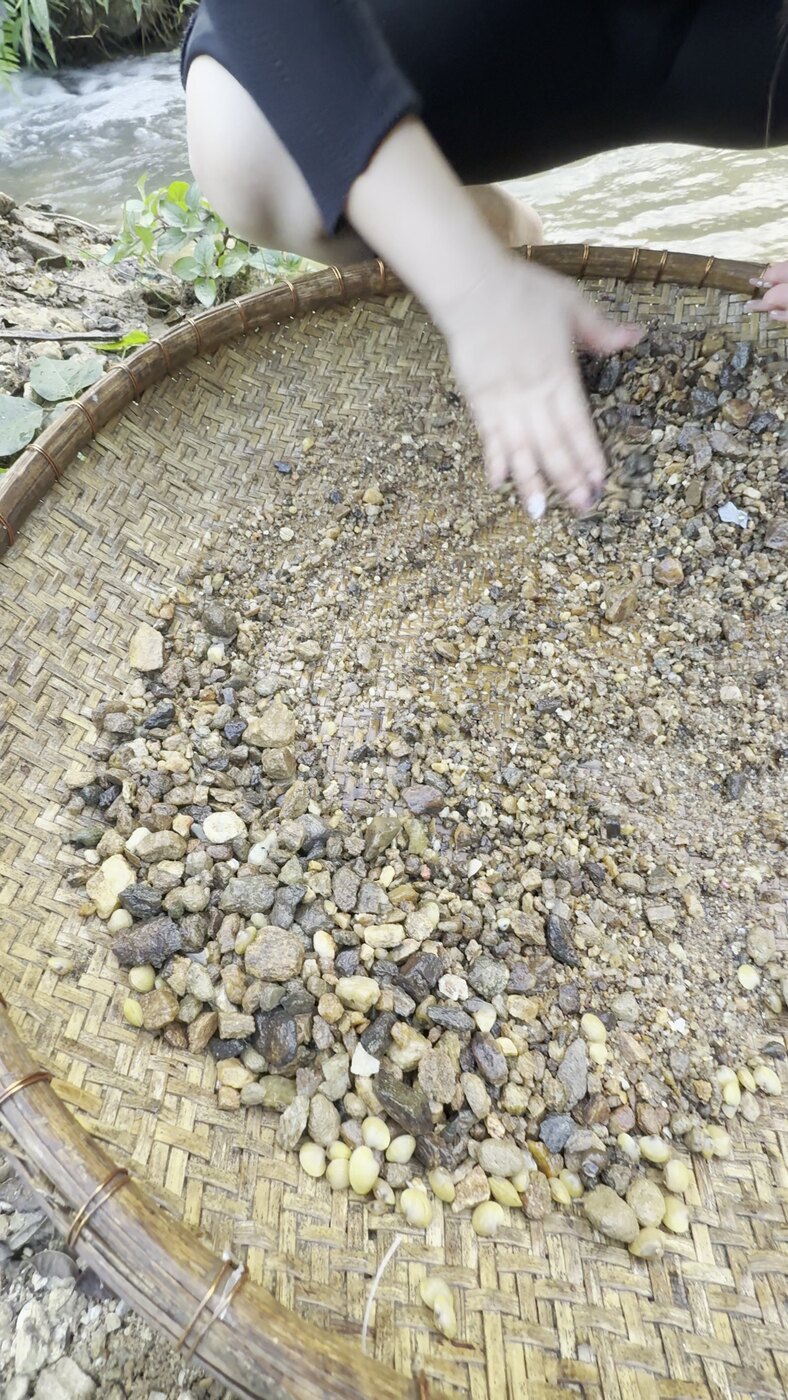
The deposits come in two forms. Primary deposits sit in the marble itself, worked by miners digging into karst pockets on the hillsides around An Phu, Khoan Thong and the surrounding valleys. Secondary (alluvial) deposits are the gem gravels washed down into the valley floors over millions of years, worked by families panning and digging in the fields. Most mining here is small-scale and artisanal — a fact that shapes everything about how stones reach the market.
From rice fields to ruby fever: a short history
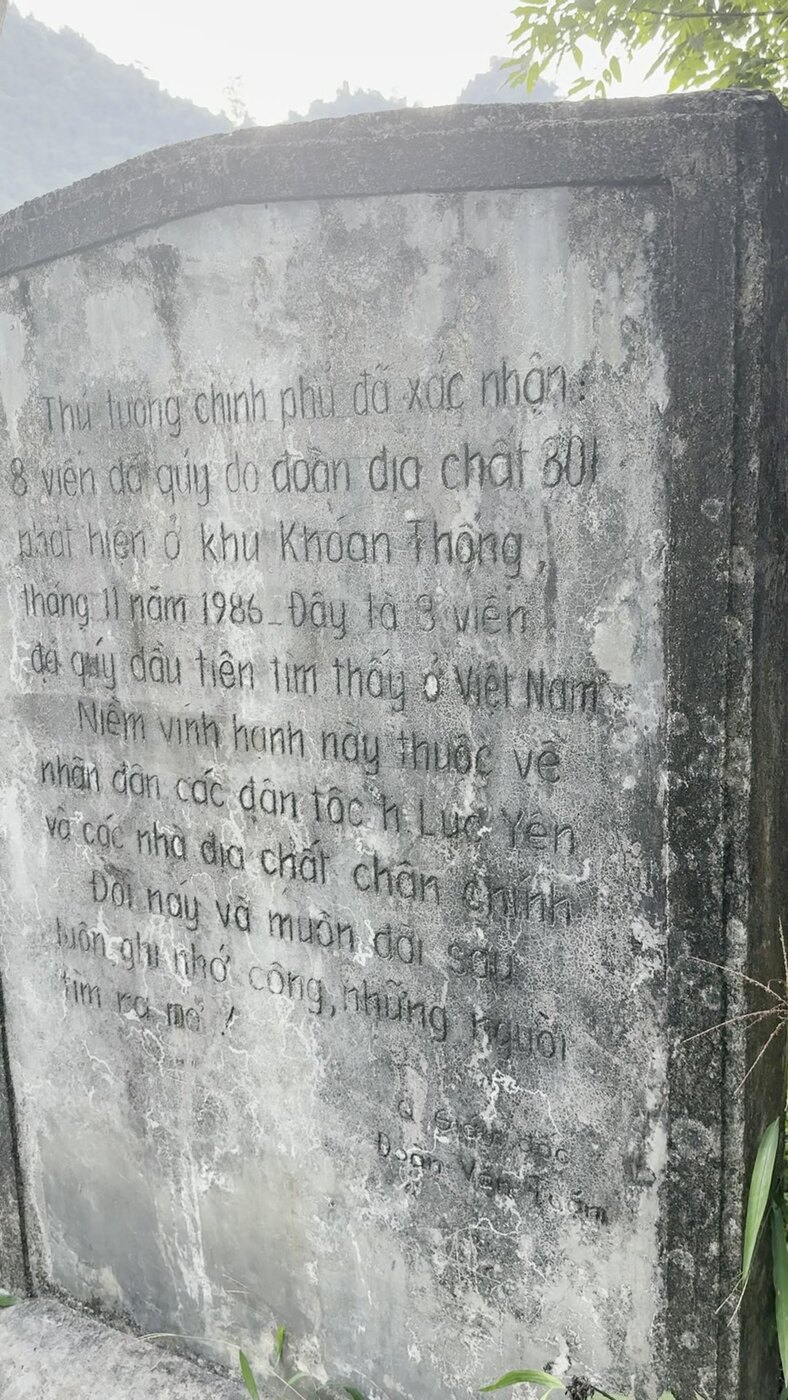
- 1986 — Gems are discovered in the Luc Yen area of what was then Yen Bai province (today part of Lao Cai province). In November 1986 the government confirms the first eight gemstones found in Vietnam, at Khoan Thong — the find recorded on the stone marker still standing there. Surveys go on to confirm ruby, sapphire and spinel deposits of commercial quality.
- Early 1990s — “Ruby fever.” Miners and traders pour into the district. Local people begin selling rough stones on wooden tables along the riverbank — the informal origin of today’s market.
- 1990s–2000s — Yen The town becomes Vietnam’s gemstone trading hub. Luc Yen artisans also develop a unique local craft: gemstone paintings, pictures made entirely of crushed and sorted natural gem gravel.
- Early 2000s — Cobalt blue spinel is identified in the Luc Yen area. Within two decades it becomes one of the most sought-after collector stones in the world.
- Today — The daily morning market hosts dozens of dealers; a second, more accessible market has opened in Yen Bai city. Fine Luc Yen material appears in auction catalogs and lab journals worldwide — usually without a single Vietnamese dealer’s name attached.
The stones of Luc Yen
Red spinel — the stone that still flows
Ask international dealers why they make the long drive from Hanoi, and the honest answer is usually spinel. Burma’s famous deposits at Mansin and Namya — source of the neon “Jedi” spinels — are largely played out. Luc Yen’s red spinel is still coming out of the ground: saturated reds, often with a subtle purplish undertone, in clean crystals that need no treatment at all. Spinel is never heated in commercial practice — what you see is what the earth made — and that honesty is a large part of why collectors have driven spinel prices up sharply over the past decade.
Cobalt blue spinel — the trophy
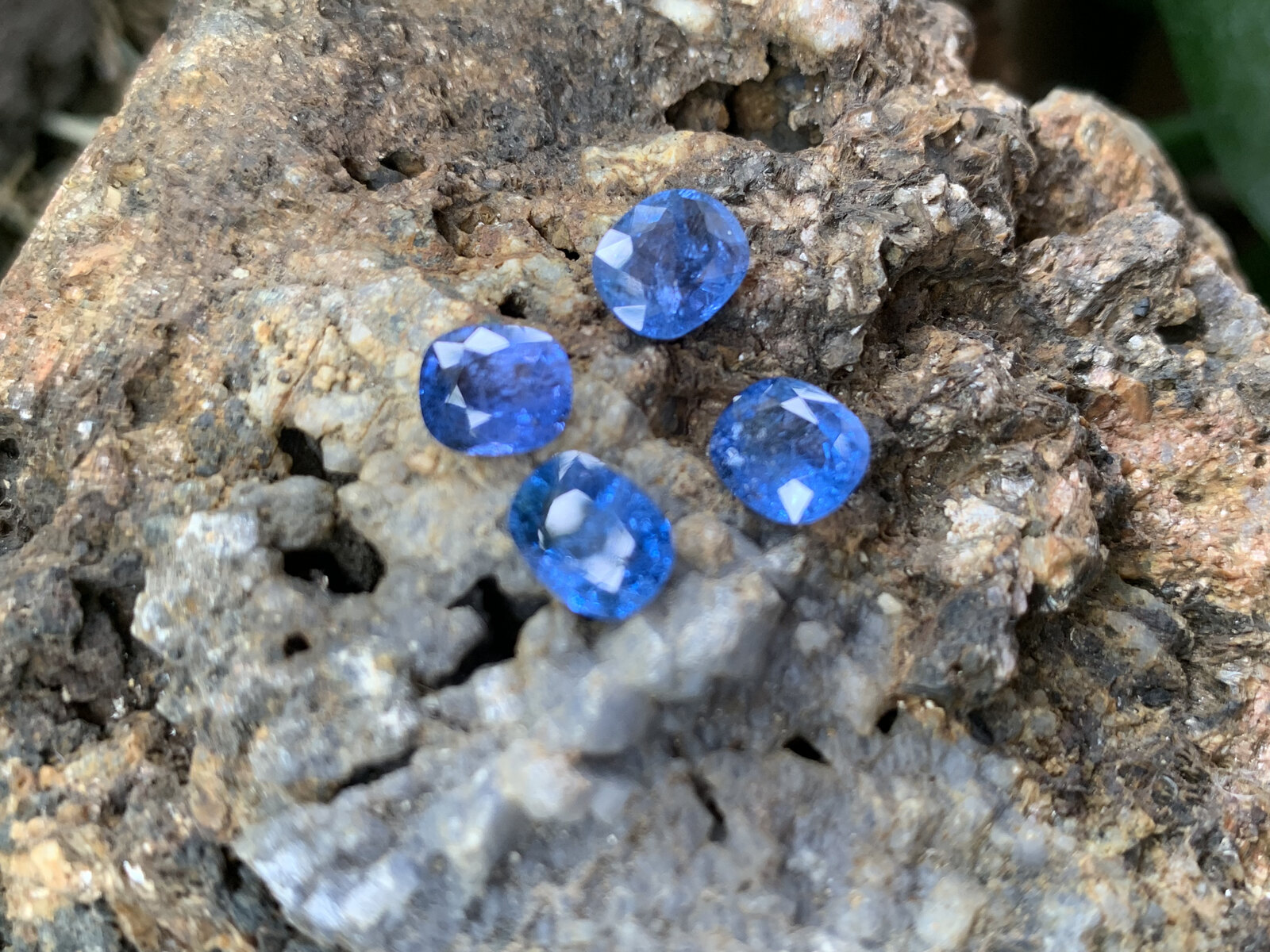
A tiny fraction of Luc Yen spinel comes out blue — colored by traces of cobalt rather than chromium. Not steel blue, not sapphire blue: an electric, glowing blue that gem dealers struggle to photograph honestly. Luc Yen is the only source on Earth producing this material in meaningful quantity, and clean stones above half a carat are genuinely rare. Lab reports from GIA or Lotus Gemology accompany virtually every significant stone, and per-carat prices for fine examples now rival or exceed fine sapphire. If Luc Yen has a crown jewel, this is it. Read our full guide to cobalt blue spinel.
Ruby — the original reason
Ruby is why the world first learned this district’s name. Luc Yen ruby is marble-hosted and low-iron like Mogok ruby, with the same strong red fluorescence; top stones reach genuine pigeon-blood color. An honest comparison: Mogok’s centuries of brand recognition mean a Burmese stone of equal quality still commands a premium — which makes fine Vietnamese ruby one of the more interesting value propositions in the colored stone world. We say this carefully: quality varies enormously, and origin alone makes no stone fine. Judge the stone, then let the origin be the story.
Sapphire — the quiet specialty
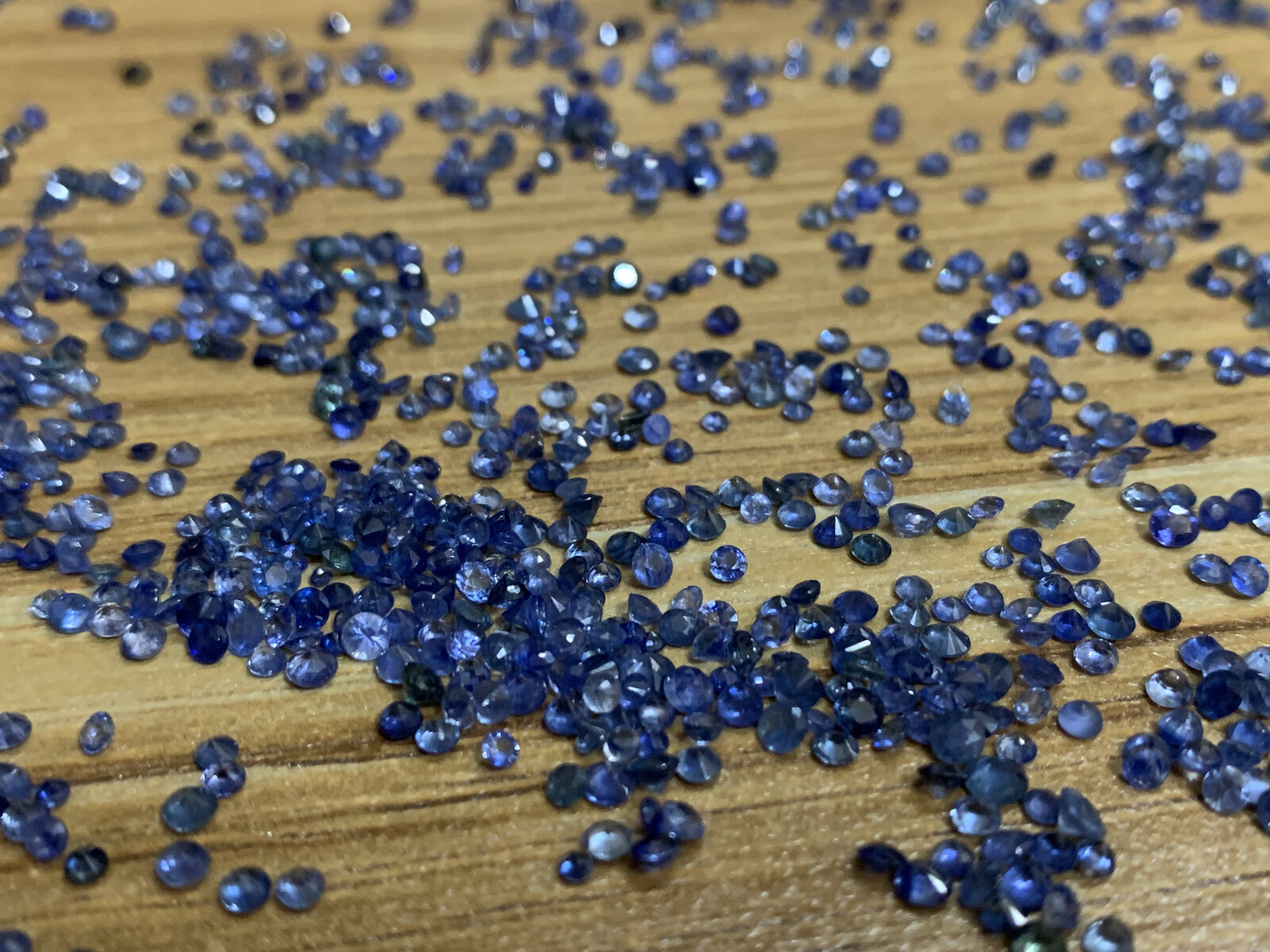
Luc Yen produces blue sapphire and, more interestingly, opalescent sapphires in lavender and violet-pink — silky stones with a soft internal glow and color flashes that collectors on forums like PriceScope specifically seek out by origin. They are modest in price and unmistakable in character.
And the rest
The district also produces tourmaline, garnet, and striking mineral specimens. Our own catalog adds one stone from elsewhere in Vietnam — peridot from the volcanic Central Highlands (Gia Lai) — because a guide to Vietnamese gems from us would be incomplete without it. (See our Vietnamese peridot collection.)
GEM FACTS — Luc Yen’s two signature stones
| Spinel | Ruby (corundum) | |
|---|---|---|
| Chemistry | MgAl₂O₄ | Al₂O₃ (Cr) |
| Mohs hardness | 8 | 9 |
| Refractive index | 1.712–1.736 | 1.762–1.770 |
| Specific gravity | ~3.60 | ~4.00 |
| Typical treatment | None | Often heated; unheated = premium |
| Luc Yen signature | Saturated red; cobalt blue | Strong fluorescence; pigeon-blood potential |

The Sunday market at Yen The
The market runs most mornings, but Sunday is the day. Trading starts around 7:00 and winds down by 10:00 — arrive at opening if you want first pick, because the best parcels change hands early.
What surprises every foreign visitor: the dealers are women. In Bangkok, Mogok, Ratnapura, Bogotá — the world’s gem trading floors are male. In Luc Yen, the tables are run by women, many from the Tày and Dao ethnic communities of the surrounding villages, and they are as sharp as any dealer in Bangkok. Negotiation happens over a pocket calculator, in Vietnamese dong, with tea and a great deal of laughter. There are no price tags. There are no certificates on the table. There is the stone, the light, your loupe, and the number on the calculator screen.
Two honest warnings we give every visitor:
- Synthetics and treated stones are present in the market. This is documented by GIA’s field researchers and it is simply true of every gem market on Earth. Locals check stones under sunlight and UV torchlight, examine inclusions with a loupe, and — above all — know their seller. If you cannot do those things yet, buy only from someone accountable, or bring someone who can.
- A story is not a certificate. “Fresh from the mine this morning” may be true and the stone can still be heated, or synthetic, or worth a tenth of the asking price. Provenance deserves curiosity and evidence.
For travelers who cannot make the four-hour drive from Hanoi: a smaller sister market now operates in Yen Bai city (about 2.5 hours from Hanoi), and in Hanoi itself the Sunday gem fair at 456 Hoang Hoa Tham brings Luc Yen dealers to the capital, 8:00–14:00.
*
What Luc Yen stones really cost
Almost nobody publishes real numbers, so here are honest ones. These are indicative 2026 ranges for good-quality natural stones bought well at or near the source — international online retail for the same spinel typically runs 25–35% higher than the spinel figures below. Exceptional stones exceed every range here, and at the market itself everything is negotiated per parcel.
| Stone | Commercial quality | Fine quality | Exceptional |
|---|---|---|---|
| Red spinel (1–3 ct) | $110–600/ct | $1,500–6,000/ct | $10,000–16,000+/ct |
| Cobalt blue spinel (0.5–1 ct) | rare in low grades | $3,750–9,000/ct | $15,000–25,000+/ct (1 ct+) |
| Pink/lavender/purple spinel | $60–300/ct | $375–1,900/ct | — |
| Ruby, untreated, small (under ~1 ct) | $80–500/ct | — | — |
| Ruby, fine unheated w/ lab report | see note below | see note below | pigeon blood: price on request |
| Silky / opalescent sapphire | $30–250/ct | up to ~$500/ct for strongly glowing stones | — |
A note on fine ruby prices — and an honest market observation. Most Luc Yen ruby comes out of the ground small: GIA’s early studies found the majority of gem-quality rough at just 2–6 mm, with clean stones above one carat genuinely rare. Small untreated rubies trade openly online at $80–500 per carat. Fine unheated Vietnamese ruby, however, barely exists on the open market — the largest online seller of Vietnamese spinel lists zero Vietnamese rubies, and no major Western dealer keeps them in stock. What exists trades privately. The working benchmark used in the trade: comparable quality to Burmese Mogok ruby at roughly 20–30% less, the discount reflecting brand recognition rather than the stone itself. If you want a fine Luc Yen ruby, you will not find it in a webshop filter — you ask someone at the source. (That, candidly, is what our inquiry button is for.)
Two things move price more than anything else at this origin: treatment status (unheated stone with a lab report is a different market from heated commercial material) and, for cobalt spinel, size — the per-carat price curve above one carat is nearly vertical.
Full price breakdown in our Spinel Buying Guide and Buying Gems in Vietnam.
How to buy safely
The short version of a much longer guide, Buying Gems in Vietnam:
- For any significant stone, require a lab report. For Vietnamese material the most respected names are Lotus Gemology (Bangkok — Richard Hughes’ lab, the reference for spinel and ruby from this region) and GIA. Reports are verifiable online by number.
- Insist on treatment disclosure in writing. “Natural” and “untreated” are different claims.
- Judge photographs skeptically. Cobalt spinel in particular is routinely oversaturated in photos. Ask for video in daylight.
- Buy the stone, not the story — and when the story matters to you, buy it from someone who can prove they were standing in it.
Every stone we sell states its treatment status, its origin down to the valley where we bought it, and — for premium stones — carries a Lotus or GIA report. Photos are unedited. That is not marketing language; it is simply how business is done when your family has to face the same market women every Sunday morning for the next forty years.
Visiting Luc Yen
- Getting there: ~230 km / 4 hours by car from Hanoi (hire a car and driver; the mountain roads share space with marble trucks). The Yen Bai city market is a 2.5-hour alternative.
- When: any morning for the market, Sunday for the full experience. Arrive by 7:00.
- Bring: a loupe, a UV torch, cash in dong, patience, and no expectation of English signage.
- Beyond gems: the karst-and-paddy landscape is spectacular, the local gemstone paintings are a genuinely unique craft, and the food — sticky rice grilled in bamboo, and rice wine you will not escape — is part of the deal.
FAQ
Where is Luc Yen?
Luc Yen is a district in Lao Cai province, northern Vietnam (formerly Yen Bai province, merged in 2025), about 230 km (4 hours by road) northwest of Hanoi, near the Chinese border region.
What gemstones is Luc Yen famous for?
Red spinel, cobalt blue spinel, ruby, sapphire (including opalescent lavender stones), tourmaline and garnet. It is Vietnam’s most important colored-stone source and trading center.
Is Luc Yen ruby good quality?
The finest Luc Yen rubies are marble-hosted, strongly fluorescent and can reach pigeon-blood color — the same geological family as Burmese Mogok ruby. Quality varies widely; judge each stone individually, ideally with a lab report.
Why is cobalt blue spinel so expensive?
Because Luc Yen is the only meaningful source on Earth, clean stones are rare above half a carat, and demand from collectors has surged. Fine examples trade from roughly $5,000 to over $25,000 per carat (2026).
Can tourists buy at the Luc Yen gem market?
Yes — the market is open to anyone, trading is in Vietnamese dong via calculator, and bargaining is expected. Synthetics and treated stones circulate, so inexperienced buyers should buy from an accountable dealer or bring an expert.
Are stones from the market treated or synthetic?
Some are. Heat-treated ruby and outright synthetics are documented in every gem market, including this one. Untreated stones with lab reports command a premium for a reason.
When is the Luc Yen gem market open?
Most mornings from about 7:00 to 10:00, busiest and best on Sunday mornings.
Luc Yen vs Mogok — which is better?
Geologically they are siblings — both marble-hosted, low-iron origins producing fluorescent ruby and fine spinel. Mogok has centuries of fame and pricing to match; Luc Yen offers comparable geology, living production, and — for now — better value. We are, of course, from Luc Yen. Judge the stones.
Every Sunday the market opens at seven, the stones come down from the mountains, and the calculators come out. It has worked this way for thirty years. The only thing that has changed is that now, the rest of the world is starting to ask where these stones come from. They come from here.
Looking for a stone like this?
Tell us the size, colour and budget — we answer within 24 hours with real photos, daylight video and an honest price. Photos unedited, treatments disclosed.
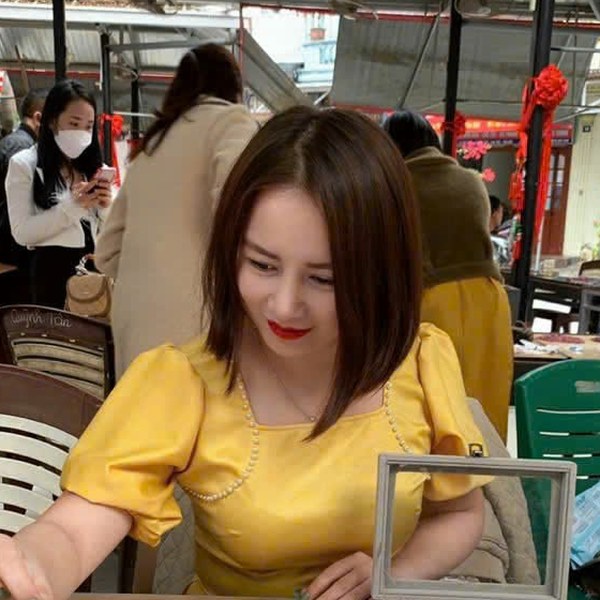
I'm Phuong — it means phoenix in Vietnamese, so friends abroad call me Phoenix. I'm a second-generation trader: my family has bought and sold stones at the Luc Yen market since 1990, from the ruby-fever years to a remarkable cobalt spinel strike we sold at the mine in 2020. On YouTube I test stones on camera in Vietnamese for 48,000 subscribers; here I do the same in English. Photos unedited, treatments disclosed, origin named — because I'll be facing the same market women next Sunday, and reputations here are for life.