Vietnamese Spinel: The Complete Buying Guide
The most famous “ruby” in the British Crown Jewels — the Black Prince’s Ruby, worn by kings into battle for six centuries — is not a ruby. It is a spinel. For most of history, the world’s finest spinels were mistaken for rubies, set in crowns, and never given their own name. That confusion is the strangest bargain in the gem world: a stone with ruby’s fire, better clarity, no routine treatments — and, until recently, a fraction of ruby’s price.
The market has been correcting that mistake fast. Burma’s legendary spinel deposits are largely played out; collectors have pushed fine spinel prices up several-fold over the past decade; and the search for the next great source leads to one place. Our home: Luc Yen, Vietnam.
This is the buying guide we wish every customer had read before their first spinel — colors, honest prices, the synthetics to avoid, and the one blue stone worth a special trip.
📥 [CTA — form MailerLite chèn sau]
Contents (anchor links)
1. Why spinel — and why now
2. What makes Vietnamese spinel special
3. The colors, ranked
4. Cobalt blue spinel: the trophy
5. Judging quality: the four Cs, spinel edition
6. Treatments and synthetics: what to watch for
7. What Vietnamese spinel costs
8. Where to buy
9. FAQ
Why spinel — and why now
Three facts explain the spinel boom:
- It is never routinely treated. Unlike ruby and sapphire — where heating is standard practice — spinel comes out of the ground finished. What you see is what the earth made. In a market anxious about undisclosed treatments, that honesty is priceless.
- It performs. Hardness 8 on the Mohs scale (excellent for daily wear), high brilliance, and eye-clean crystals are common — fine spinel often looks cleaner than fine ruby at a fraction of the price.
- Supply is shrinking as fame grows. The Burmese sources that fed the crown jewels are largely exhausted. Mahenge (Tanzania) had its moment in 2007 and its best material is thinning. Prices for fine spinel have risen sharply for a decade — several trade sources estimate roughly 200% over the 2010s — and the stone still trades below equivalent ruby.
GEM FACTS — Spinel
| Property | Value |
|---|---|
| Chemistry | MgAl₂O₄ (magnesium aluminate) |
| Mohs hardness | 8 |
| Refractive index | 1.712–1.736 (singly refractive) |
| Specific gravity | ~3.60 |
| Routine treatment | None |
| Signature Vietnamese colors | Saturated red, hot pink, lavender, violet — and cobalt blue |
What makes Vietnamese spinel special
Luc Yen’s spinel grows in the same low-iron marble that produces the district’s fluorescent rubies (full geology in the Luc Yen Origin Guide). Low iron matters for spinel exactly as it does for ruby: iron deadens color; its absence lets chromium (red/pink) and cobalt (blue) speak at full volume.
An honest comparison with the other two great origins — offered as what it is: the view from our side of the table at the Luc Yen market, a trader’s perspective rather than a lab’s ranking (and yes, we are from here — judge the stones):
| Burma (Mogok/Namya) | Mahenge, Tanzania | Luc Yen, Vietnam | |
|---|---|---|---|
| Famous for | Historic reds; neon “Jedi” pinks | Neon pink-red, the 2007 sensation | Saturated reds; cobalt blue |
| Character | Pure red, top saturation | Glowing neon pink | Rich red, often a subtle purplish undertone; vivid pinks and lavenders |
| Supply today | Largely played out | Declining | Active — still flowing |
| Price for equal quality | Highest (name premium) | High | Typically lower — the value pick |
A working dealer’s summary we agree with: Burmese material is the trophy of the past, Mahenge of the 2010s — Vietnamese spinel is the stone still actually coming out of the ground.
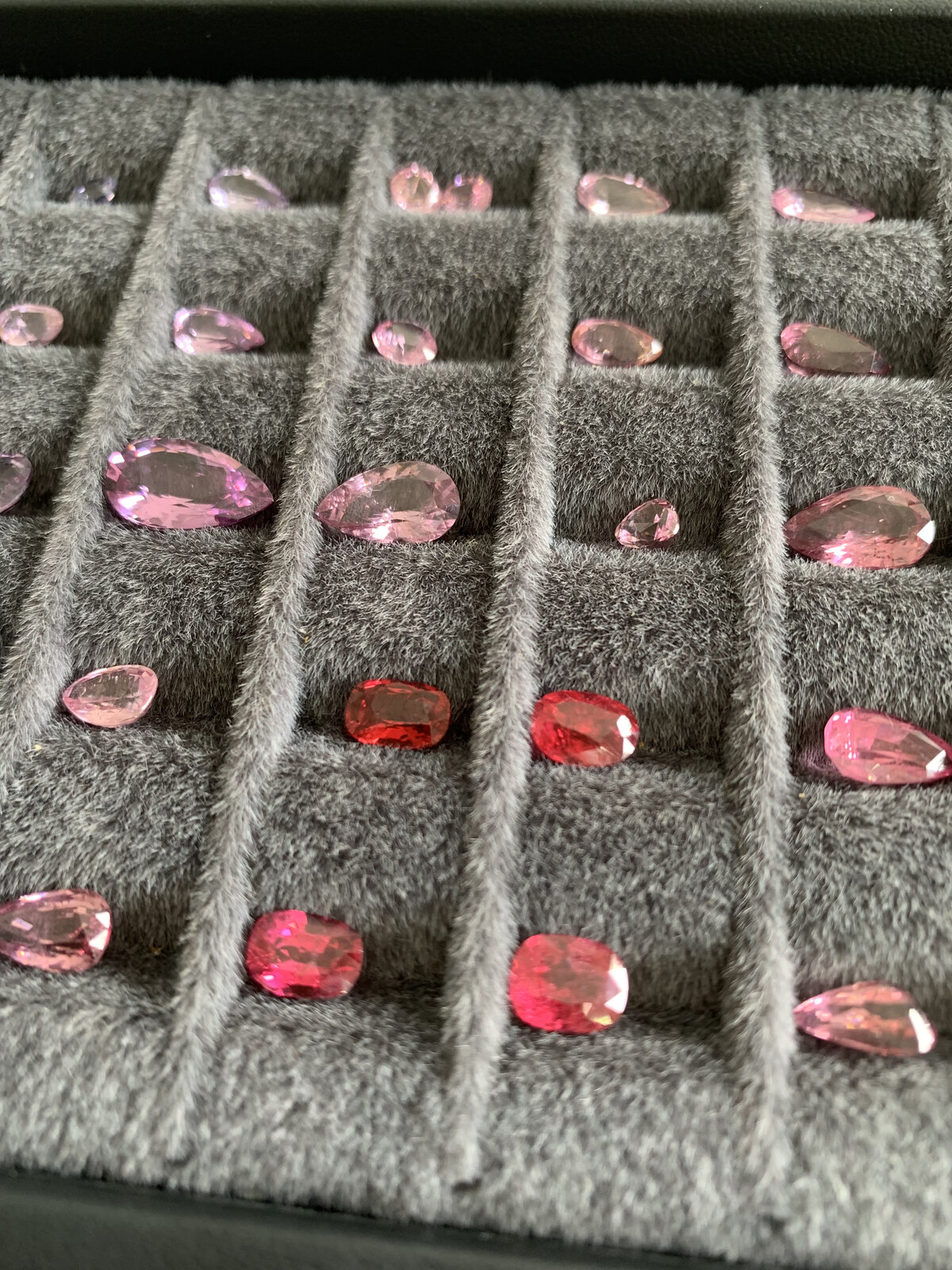
The colors, ranked
From most to least valuable, with what to look for:
- Red — the king. Look for saturated, open red without excessive darkness; a slight purplish flash is a Luc Yen signature, not a flaw. Fine reds are the district’s pride.
- Cobalt blue — the freak rarity; own section below.
- Hot pink / pink-red — approaching the neon look Mahenge made famous; the best Vietnamese pinks compete at a lower price.
- Lavender / violet — abundant, beautiful, and one of the best value-per-dollar colored stones anywhere: clean stones in the hundreds, not thousands, of dollars per carat.
- Purple / plum — moody, underrated, inexpensive.
- Grey-blue / steel blue (iron-colored) — attractive and affordable, but this is not cobalt blue and should never be priced like it (see below).
Cobalt blue spinel: the trophy
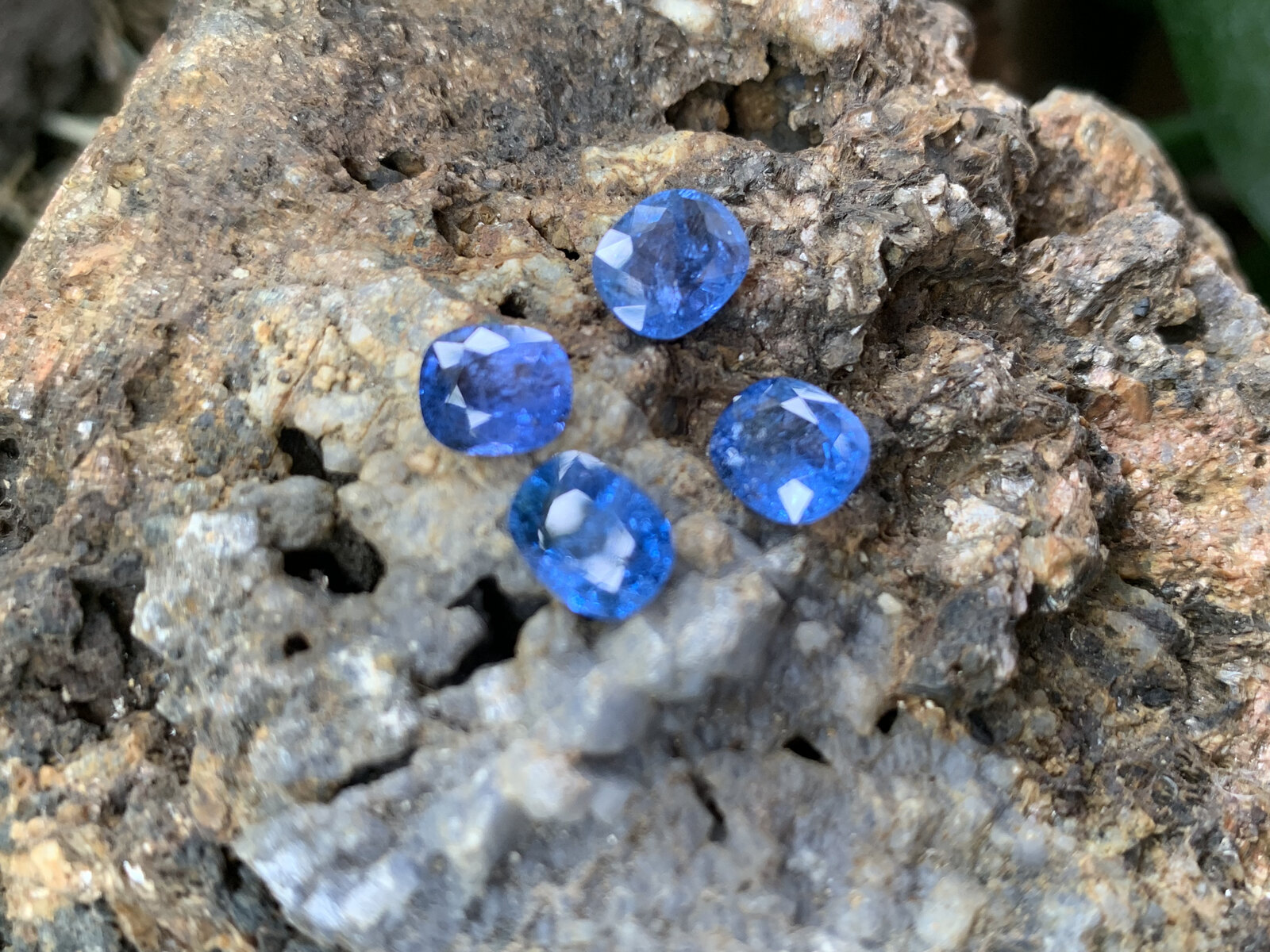
Once or twice in a generation, a stone changes how collectors see an origin. For Luc Yen it is cobalt blue spinel: an electric, inner-lit blue caused by traces of cobalt, found in meaningful quantity nowhere else on Earth — the deposits cluster around An Phu commune, a short drive from our market.
What every buyer must know:
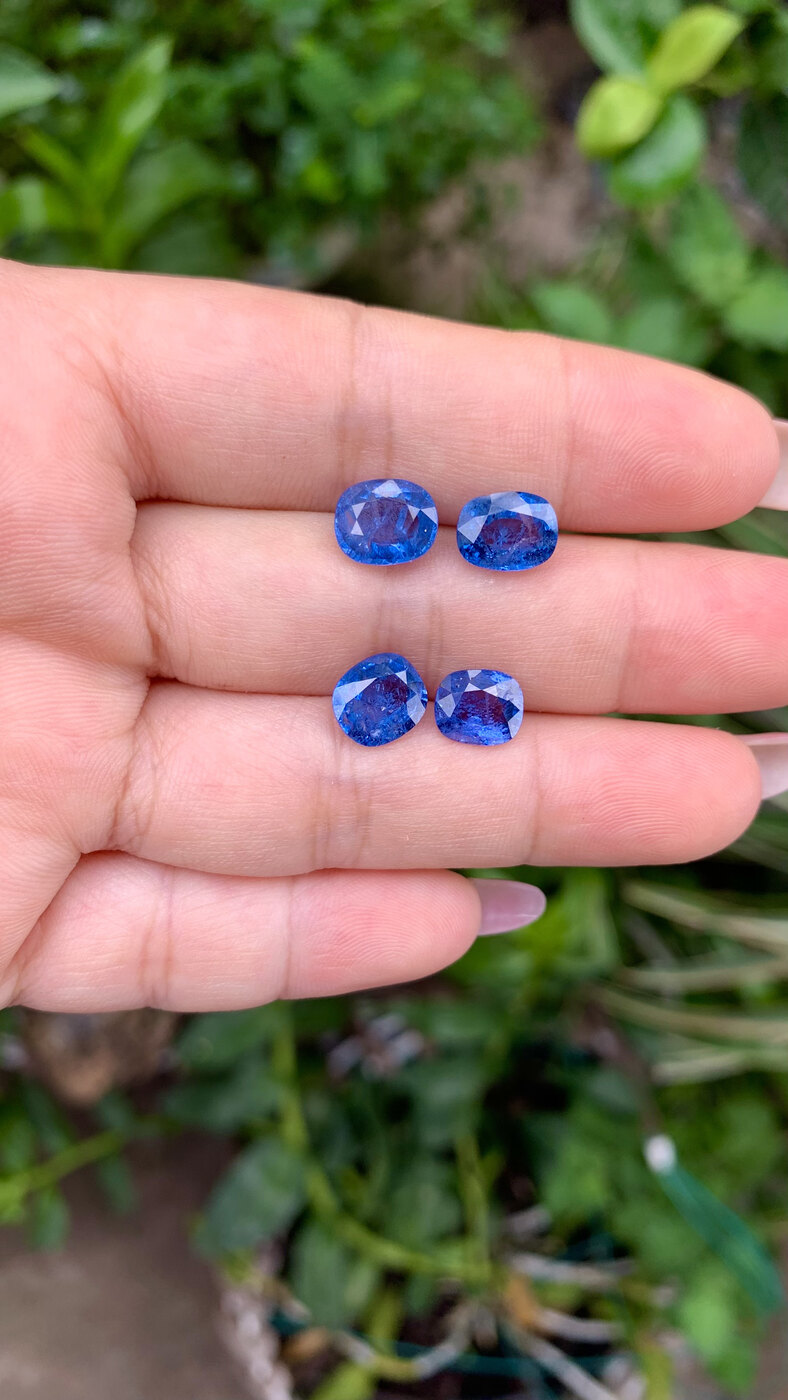
- “Blue spinel” and “cobalt spinel” are different stones. Most blue spinel worldwide is colored by iron: greyish, steely, modest. True cobalt-dominant blue is neon, saturated, alive in any light. The difference is thousands of dollars per carat — only a lab report (Lotus Gemology or GIA stating cobalt as the coloring element) settles it. Never pay cobalt prices without one.
- Sizes are tiny. Clean faceted stones above half a carat are rare; above one carat is a news event in the trade. Be suspicious of large “cobalt spinels” at friendly prices.
- Photos lie. Cobalt blue is the most oversaturated color in online gem photography. Ask for video in daylight, ideally next to a ruler or a hand.
- Prices are vertical. Fine half-carat stones trade in the thousands per carat; above one carat, five figures per carat is normal (current ranges below).
We know this material first-hand. In 2020, our family sold a parcel of rough cobalt spinel at the mine, to cutters. It had been broken out of a single block of host rock, and inside it the spinel sat not as one great crystal but as many small, thin pieces layered against each other. That is cobalt spinel in one image: even a serious strike breaks into fragments — which is exactly why a clean faceted stone above a carat is an event, and priced like one.
Judging quality: the four Cs, spinel edition
- Color (80% of the value). Saturation first: the best stones are vivid without being dark. Tone: medium to medium-dark. In reds, watch for stones that go brownish in low light — the good ones stay red.
- Clarity. Eye-clean is the standard for fine spinel — it forms in clean octahedral crystals, so you do not need to tolerate the inclusions you would accept in ruby. Minor inclusions are fine at commercial prices; they should discount the stone, not be explained away.
- Cut. Much source material is native-cut for weight retention: expect windows (a see-through center) and chunky pavilions. A windowed stone is not worthless — it is cheaper, and often worth recutting. Precision-cut Vietnamese spinel commands a premium because the material rewards it.
- Carat. Price per carat steps up sharply at 1 ct and again at 3 ct for reds; for cobalt blue the step is at half a carat. Matched pairs and clean stones over 2 ct are where Vietnamese red spinel starts becoming genuinely hard to replace.
Treatments and synthetics: what to watch for
- Treatments: essentially none — and that is the point. Spinel is not routinely heated or filled. (Laboratory heating of spinel exists but is uncommon in the trade; a lab report will note it.) When we say “what you see is what the earth made,” spinel is the stone where that is literally true.
- Synthetics: extremely common — this is spinel’s real trap. Flame-fusion synthetic spinel has been mass-produced for a century; it filled class rings and birthstone jewelry for decades and it circulates in every gem market, including Vietnamese ones. Warning signs: too clean, too cheap, colors too perfect, and — for the technically minded — curved growth features under magnification where natural stones show none.
- The defense is boring and effective: buy from accountable sellers, insist on written “natural spinel” on the invoice, and for significant stones get a lab report. Synthetic spinel is worth a few dollars; it only becomes a problem when it wears a natural price tag.
(Full field-checking ritual — sunlight, loupe, UV — in Buying Gemstones in Vietnam.)
What Vietnamese spinel costs
Indicative 2026 ranges for natural stones bought well at or near the source; international online retail typically runs 25–35% higher. Full context in the Origin Guide price table.
| Color | Commercial | Fine | Exceptional |
|---|---|---|---|
| Red (1–3 ct) | $110–600/ct | $1,500–6,000/ct | $10,000–16,000+/ct |
| Cobalt blue (0.5–1 ct) | rare in low grades | $3,750–9,000/ct | $15,000–25,000+/ct (1 ct+) |
| Hot pink | $110–500/ct | $1,000–4,000/ct | — |
| Lavender / violet / purple | $60–300/ct | $375–1,900/ct | — |
| Grey-blue (iron) | $40–200/ct | $250–800/ct | — |
What moves price: saturation above all; then size thresholds (1 ct / 3 ct reds, 0.5 ct cobalt); then cut quality. What does not move price: a seller’s story, unless a lab agrees with it.
Where to buy
- At the source: the Luc Yen Sunday market — the experience of a lifetime, with the caveats covered in our Vietnam buying guide.
- Online, verified: for a significant stone, buying from a source dealer who ships with lab reports is the safest route — everything verifiable before money moves.
- From us: we list our spinel with unedited photos, treatment disclosure and origin down to the valley — premium stones with Lotus or GIA reports. Browse current spinel · Cobalt spinel · or ask us to find you one — being at the market every week means we see stones that never reach any website.
FAQ
Is spinel a real precious gemstone?
Yes — a natural gem species (MgAl₂O₄, hardness 8) with centuries of royal history; several famous “rubies” in crown jewels are actually spinels. It was historically underpriced because of that mistaken identity, which is precisely why collectors love it now.
Is Vietnamese spinel good quality?
Luc Yen produces some of the world’s finest spinel today: saturated reds and pinks from low-iron marble, and the world’s only meaningful source of cobalt blue spinel. As with any origin, quality varies stone by stone.
What is cobalt spinel and why is it so expensive?
Blue spinel colored by traces of cobalt rather than iron — neon, glowing blue. Luc Yen is effectively its only significant source, clean stones above half a carat are rare, and fine examples trade from thousands to over $25,000 per carat. Only a lab report confirms cobalt coloring.
Is spinel heat-treated like ruby?
No — spinel is not routinely treated. That untreated-by-default honesty is one of its main attractions. Labs will flag the rare exceptions.
How can I tell spinel from ruby?
Visually they can be near-twins (history’s kings couldn’t tell). Technically: spinel is singly refractive and slightly softer (8 vs 9). In practice: a loupe, a polariscope or a lab settles it in minutes.
Is Vietnamese spinel a good investment?
Fine spinel has appreciated strongly for a decade, and Vietnamese material is the live supply as older origins fade. But buy stones, not promises: quality and documentation drive value, and no honest dealer guarantees appreciation.
What size spinel should I buy?
The sweet spots: 1–2 ct for fine reds (below the 3 ct price jump), any clean half-carat-plus for cobalt blue, and 2–4 ct for lavenders where prices stay gentle.
Vietnamese spinel vs “Jedi” spinel — what’s the difference?
“Jedi” refers to neon pink-red spinel from Burma’s Namya/Mansin areas — largely exhausted today. The best Vietnamese hot pinks approach that look at a lower price; the reds run richer, often with a purplish undertone.
Six hundred years ago a king wore a spinel into battle believing it was a ruby, and it protected his reputation just fine. The stone was never the problem — the name was. Buy the stone.
📥 [CTA — form MailerLite chèn sau]
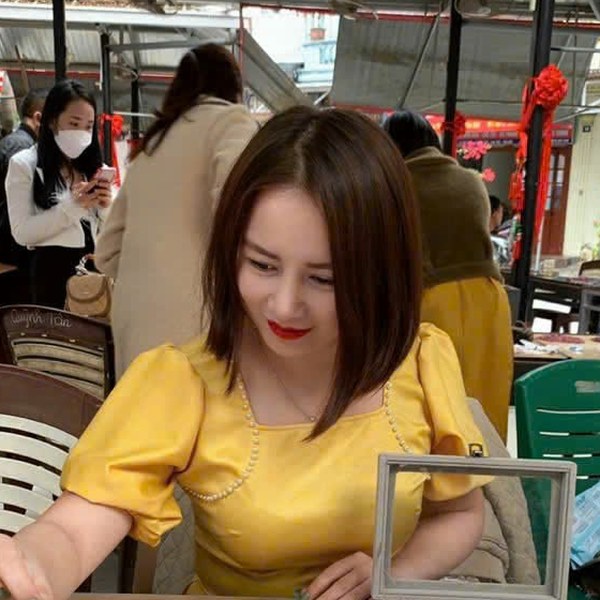
I'm Phuong — it means phoenix in Vietnamese, so friends abroad call me Phoenix. I'm a second-generation trader: my family has bought and sold stones at the Luc Yen market since 1990, from the ruby-fever years to a remarkable cobalt spinel strike we sold at the mine in 2020. On YouTube I test stones on camera in Vietnamese for 48,000 subscribers; here I do the same in English. Photos unedited, treatments disclosed, origin named — because I'll be facing the same market women next Sunday, and reputations here are for life.