Cobalt Spinel: Why Collectors Pay Premium Prices
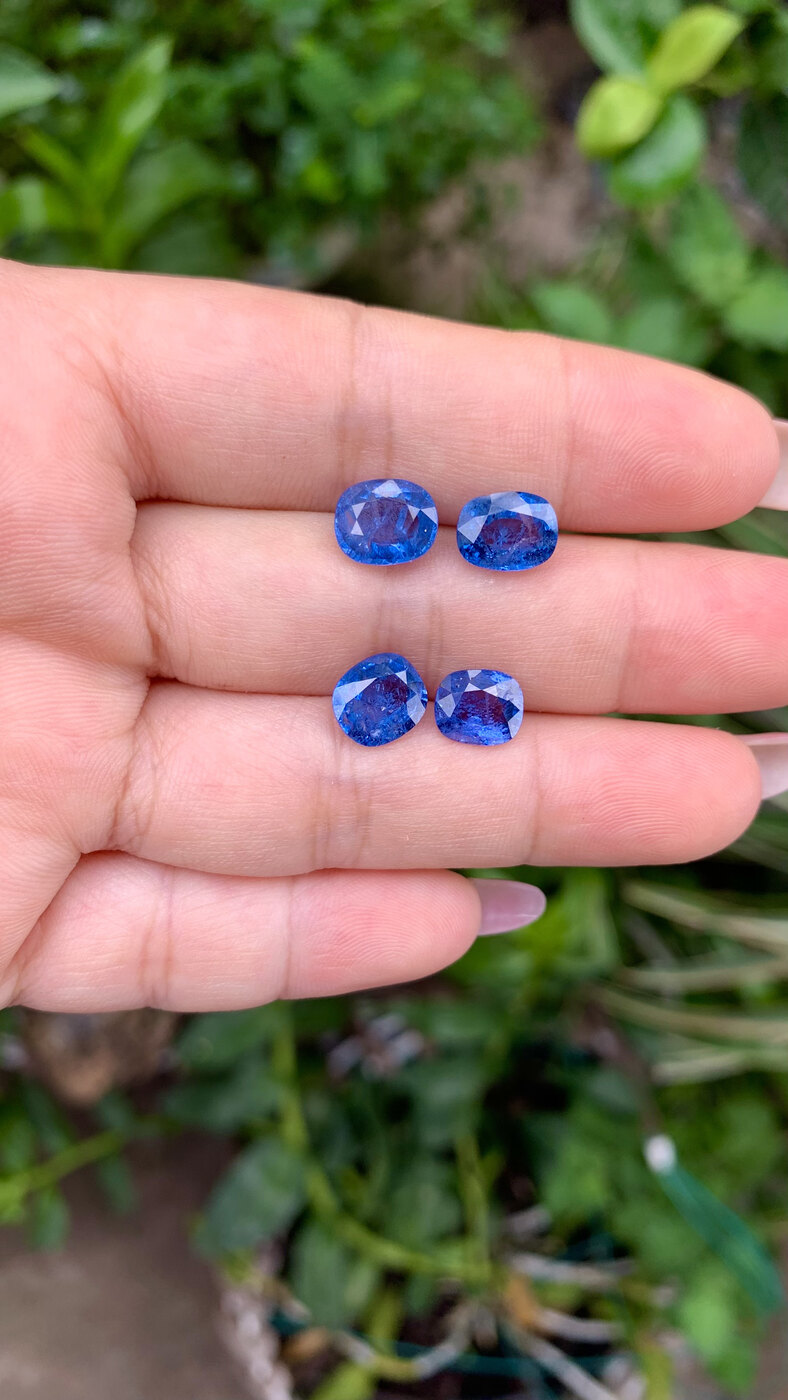
Cobalt spinel is the rarest and most expensive colour in the spinel family: an electric, inner-lit blue caused by traces of cobalt in the crystal. Only a handful of places on Earth produce it in gem quality, and Luc Yen in northern Vietnam is one of them. Collectors pay a premium for three reasons — the colour physics are genuinely exceptional, fine rough is vanishingly scarce, and unlike most blue gems it is sold untreated. This guide explains all three, using published gemological research rather than dealer talk.
What actually makes a blue spinel “cobalt”
All blue spinel is coloured by some mix of two elements: iron and cobalt. What separates a sleepy grey-blue stone from the neon blue that collectors chase is not how much colouring element the crystal carries — it is which one dominates.
The reference study here is Chauviré et al., “Blue Spinel from the Luc Yen District of Vietnam”, published by the Gemological Institute of America in Gems & Gemology (Spring 2015). Its central finding: in spinel, cobalt (Co²⁺, sitting in the tetrahedral site of the crystal where magnesium normally lives) is roughly twenty times more powerful a colouring agent than iron. Even when a crystal contains far more iron than cobalt, a small dose of cobalt can still dominate the colour — that is what produces the saturated, glowing blue.
The iron-to-cobalt ratio: the science behind the price ladder
The same GIA study measured trace chemistry across Luc Yen blue spinels and found that the iron-to-cobalt ratio predicts the colour grade — and therefore, in practice, the price tier:
| Fe/Co ratio (approx.) | What the eye sees | Market tier |
|---|---|---|
| ~10 | Saturated, vivid “cobalt blue” — the neon look | Top collector material |
| ~130 | Pleasant sky blue | Mid market |
| ~425 | Greyish blue — iron mask over the colour | Commercial |
This is worth understanding before you buy, because “cobalt spinel” is used loosely in the trade. Two stones can both legitimately contain cobalt, yet sit at opposite ends of this ladder. When the iron content climbs, it lays a grey mask over the blue — and the premium disappears with the glow. If a stone looks grey-blue in daylight, no certificate wording will make it a top stone.
Where cobalt spinel comes from
Gem-quality cobalt-blue spinel is confirmed from very few sources: Luc Yen, Vietnam; Tanzania; and occasional stones from Sri Lankan gravels. Each source trades on its own reputation, and fine stones from any of them are rare — we say this plainly because origin alone does not make a stone good; the colour does.
Around Luc Yen, the blue spinel occurrences cluster within roughly thirty square kilometres of marble country. The GIA field study mapped primary deposits — where the spinel still sits in its white marble host — alongside secondary gravel workings where farmers wash stones from streambeds. The geology is remarkable: these marbles are the metamorphosed floor of an ancient ocean, cooked and folded in two mountain-building events, with cobalt delivered into the growing crystals by mineral-rich fluids. Interestingly, the study found blue spinel keeps different company than ruby — at the primary deposits the two are not found together in the same marble beds, which is one reason a digger’s strike is always a lottery. For the wider story of the district, see our Luc Yen Origin Guide.
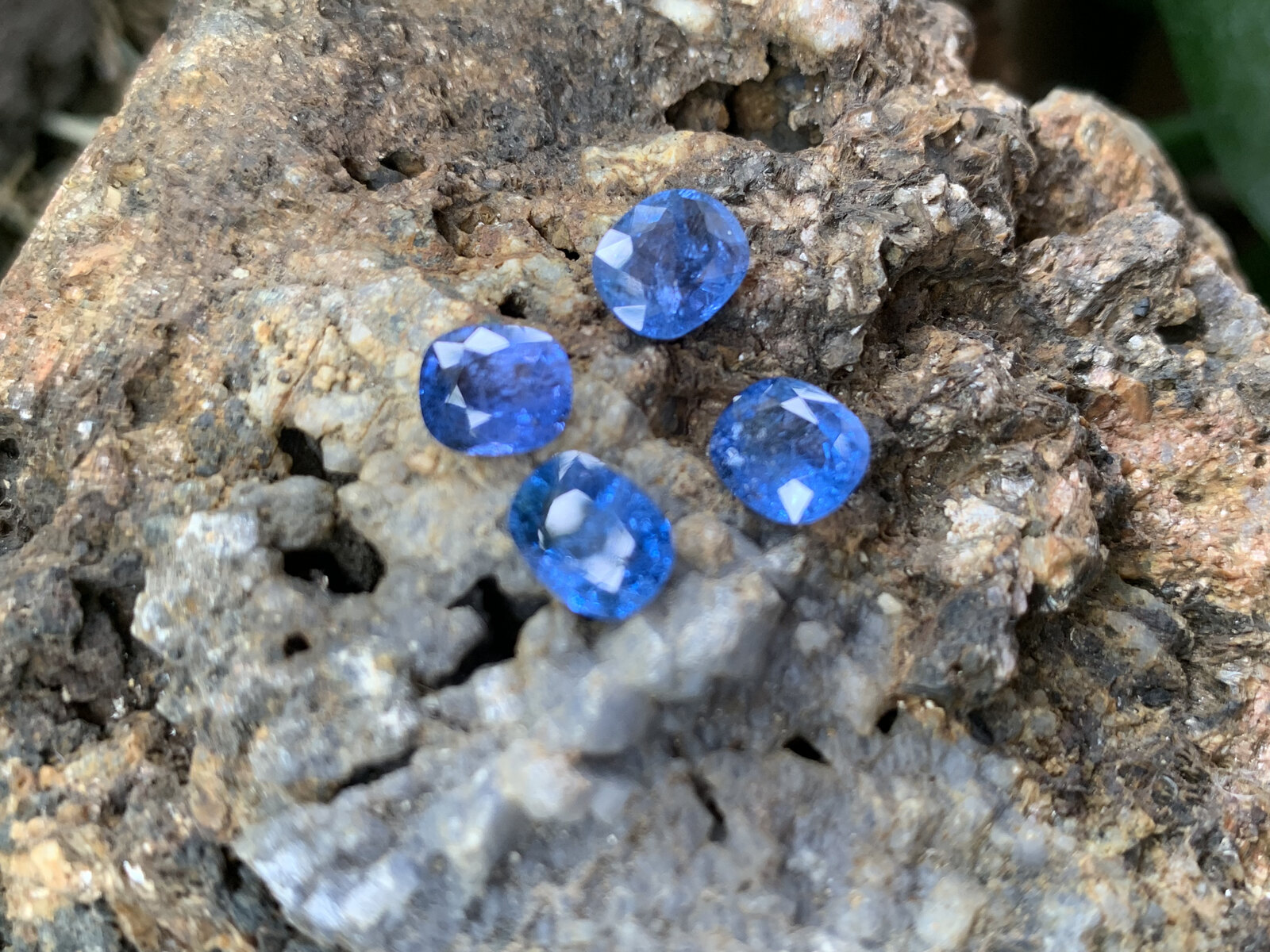
Within Luc Yen, local dealers know two names for cobalt material: the An Phu commune workings, and Bai Buoi, a locality that came to prominence in 2019 and produced the intensely coloured stones our own family has held back since that year. Very little fresh Bai Buoi material reaches the Sunday market today; most of what trades now comes out of parcels that dealers set aside years ago.
Why fine stones are so scarce — and so small
Scarcity in cobalt spinel is not marketing. It is structural:
- The rough breaks small. Even a good strike tends to come out as small, layered pieces. The most saturated Luc Yen material documented in the GIA study rarely exceeded one carat cut; brighter but less saturated stones reach a few carats; anything clean and vivid above that is an event in the trade.
- It is a by-product. Miners around Luc Yen dig primarily for ruby and red spinel. Blue spinel is what occasionally comes up alongside — nobody can simply “mine more cobalt spinel” when demand rises.
- Demand is international. Buyers from Europe, Japan and Singapore come to the Luc Yen market asking for cobalt spinel by name. A tiny supply meeting a global collector base is the whole premium in one sentence.
Prices climb steeply — and non-linearly — with saturation and size. We deliberately do not print price-per-carat figures here: the spread between a greyish one-carat stone and a vivid one is so wide that a single number would mislead you. What we can say is that the Fe/Co ladder above is what you are paying for.
Looking for a cobalt spinel?
Tell us your size and budget and we will reply within 24 hours with real daylight photos of what is actually available.
The untreated advantage
Most fine blue sapphire on the market has been heated. Spinel is the opposite story: the overwhelming majority of spinel, cobalt blue included, is sold exactly as it came out of the ground. The GIA study’s Raman spectroscopy confirmed its Luc Yen samples were natural and unheated — and laboratories can verify this on individual stones. For collectors, “no indications of treatment” as the default condition is a large part of spinel’s appeal: what you see is what the earth made.
Natural cobalt spinel also carries a chemical signature — elevated zinc, gallium and lithium — that laboratories use to separate it from synthetic cobalt-blue spinel, which has existed for decades and looks convincing to the eye. This is why we recommend a lab report for any significant purchase; our Buying Gems in Vietnam guide explains how that works in practice here.
Simple tests, and what they really tell you
Two classic observations, both documented in the G&G study, are worth knowing — not as substitutes for a lab report, but as honest field checks:
- Chelsea colour filter: cobalt-rich blue spinel shows pink to red through the filter, and the reaction strengthens with saturation. A grey, iron-dominated blue shows little.
- Light-source shift: fine cobalt spinel often drifts slightly toward violet-lavender under warm incandescent light. This is a natural optical character of the material — a small colour change is a feature, not a flaw.
What these checks cannot do is separate natural from synthetic, or Vietnamese from Tanzanian. That is laboratory work, done on trace chemistry and inclusion study.
Cobalt spinel vs blue sapphire
The two are often confused at first sight, and they even occur in the same district. The differences that matter to a buyer:
| Cobalt spinel | Blue sapphire | |
|---|---|---|
| Colour source | Cobalt (+ iron) | Iron + titanium |
| Character of the blue | Open, neon, “lit from inside” | Deeper, velvety, more reserved |
| Typical treatment | None | Commonly heated |
| Fine sizes | Mostly under ~1–3 ct | Larger clean stones exist |
| Optics | Singly refractive | Doubly refractive |
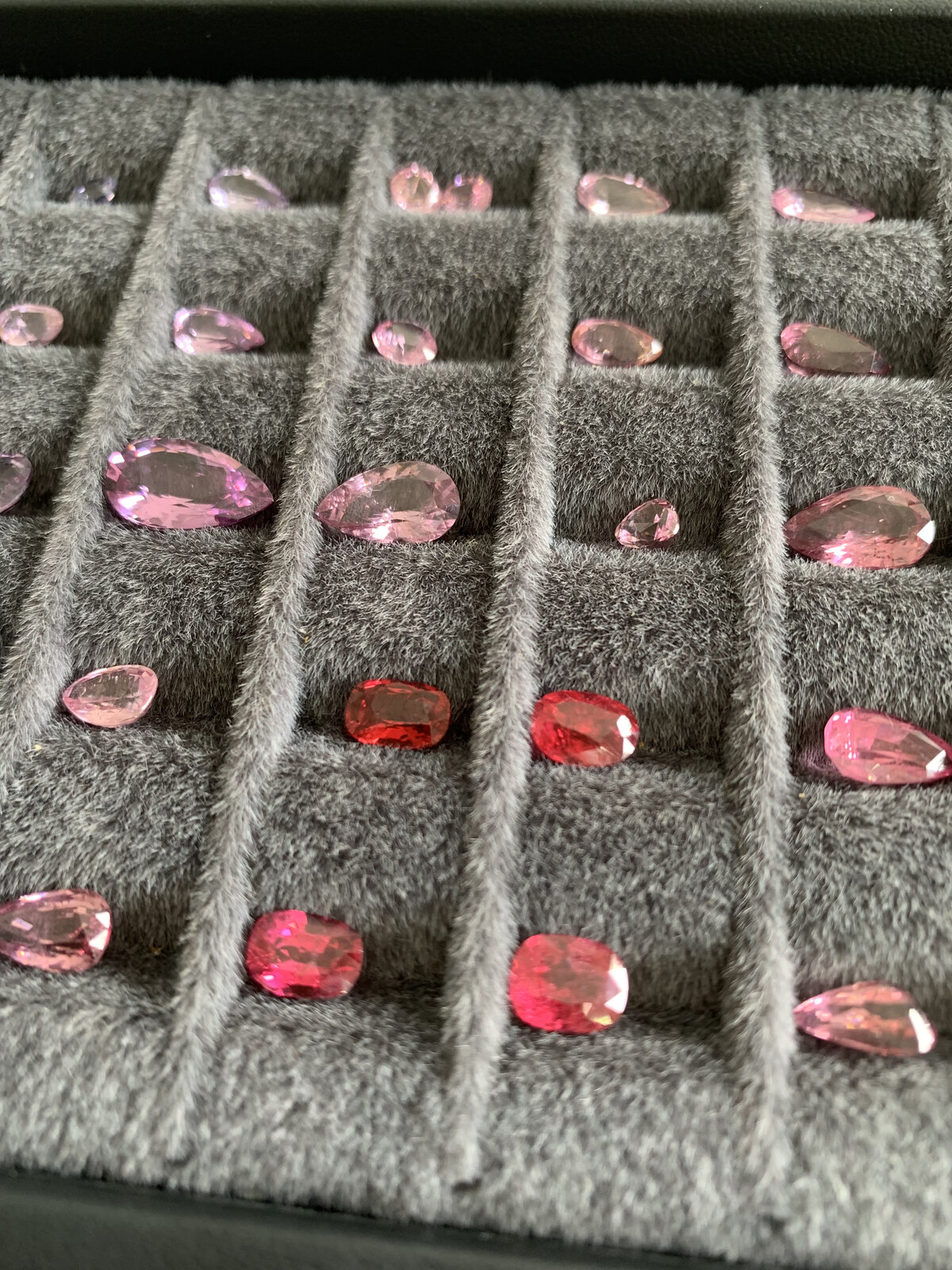
Neither is “better” — they are different animals. If you want the full sapphire side of the comparison, our sapphire page covers the local material, and the Spinel Buying Guide walks through the rest of the spinel colour range, from flame red to lavender.
How we judge a cobalt spinel at the market
When a parcel reaches our table, the routine is always the same. Daylight first — the stone must hold its blue without a grey cast, face-up, at arm’s length. Then the hand: neon saturation you can see across a table is what the premium is for. Then the loupe for eye-visible inclusions, which matter more in a pale stone than a vivid one. And for any stone worth serious money, a laboratory report confirming natural origin and no treatment before anyone talks numbers. If you are considering a stone — from us or anyone — insist on photographs and video taken in daylight, not under a dealer’s lamp.
Quick answers
Is cobalt spinel a good investment? We sell gems, not investment advice. What we can say factually: supply is tiny, demand is international, and fine untreated stones are the kind of material that rarely returns to the market once collected.
Can I see cobalt spinel at the Luc Yen market? Occasionally, and mostly in small sizes from old parcels. Fresh vivid material is rare enough that serious stones usually change hands dealer-to-dealer before reaching an open table.
How do I know the blue is from cobalt and not just iron? By eye: the neon quality and absence of grey. Formally: a lab report — trace-element analysis reads the cobalt directly.
Looking for a cobalt spinel?
Tell us your size and budget and we will reply within 24 hours with real daylight photos of what is actually available.
Primary reference: Chauviré, B., Rondeau, B., Fritsch, E., Ressigeac, P., Devidal, J.-L., “Blue Spinel from the Luc Yen District of Vietnam”, Gems & Gemology, Vol. 51, No. 1 (Spring 2015), pp. 2–17, Gemological Institute of America. Field observations are our own from the Luc Yen market.

I'm Phuong — it means phoenix in Vietnamese, so friends abroad call me Phoenix. I'm a second-generation trader: my family has bought and sold stones at the Luc Yen market since 1990, from the ruby-fever years to a remarkable cobalt spinel strike we sold at the mine in 2020. On YouTube I test stones on camera in Vietnamese for 48,000 subscribers; here I do the same in English. Photos unedited, treatments disclosed, origin named — because I'll be facing the same market women next Sunday, and reputations here are for life.