Visiting the Luc Yen Gem Market: A Practical Guide
The Luc Yen gem market opens at dawn and is finished before most travellers have had breakfast. Tables go up around 6:30 in the morning, serious trading runs from about 7:00, and by 10:00 the stones have gone back into their paper packets and the traders have gone home. There is no entrance fee, no ticket, nobody to check you at the door — you simply walk in. But if you drive up from Hanoi on the morning itself, you will arrive to an empty square. That single scheduling fact is the thing most first-time visitors get wrong, and it is the reason this guide exists.
Our family has traded at this market since 1990. What follows is the practical side of the trip — how to get here, where to sleep, what the morning actually looks like, how money changes hands, and how to behave at a table so that people are glad you came. For what the stones are and how to judge them, read the Luc Yen origin guide and our guide to buying gemstones in Vietnam first. This one is about the journey.
Start here: the address changed in 2025
Almost every travel article about this market — and a good many maps — still gives the address as Yen The town, Luc Yen district, Yen Bai province. That is no longer administratively correct, and it can genuinely confuse a booking form.
In June 2025 Vietnam carried out a nationwide administrative reorganisation. Yen Bai province was merged into Lao Cai province, and the district tier was abolished entirely: the country now runs on provinces and communes or wards. Under Resolution 1680/NQ-UBTVQH15, Yen The township was combined with the neighbouring communes of Minh Xuan, Yen Thang and Lieu Do to form the new Luc Yen commune, Lao Cai province.
What this means in practice:
- Nothing physical moved. The market is in the same place it has been for thirty years — on Nguyen Tat Thanh street, beside the lake in the middle of town.
- Everybody local still says Yen The for the town and Luc Yen for the area. Say either and you will be understood.
- Search maps for “Luc Yen gem market” or “chợ đá quý Lục Yên”. If a form demands a province, the current answer is Lao Cai; older paperwork saying Yen Bai is not wrong, just out of date.
Getting there from Hanoi
The market is roughly 230 km northwest of Hanoi — about four hours on the road, with the last stretch on mountain highway shared with marble trucks. Four options, in the order we would actually recommend them:
| How | Time from Hanoi | Honest assessment |
|---|---|---|
| Private car with driver | ~4 hours | The sane choice. Take the Noi Bai–Lao Cai expressway, then Highway 70 north — the market is about 90 km beyond Yen Bai city. A driver solves the 5 a.m. problem on market morning and can take you to the lake afterwards |
| Bus | ~3 hours to Yen Bai, then onward | Cheap and frequent from My Dinh station to Yen Bai city; from there you continue by local bus or taxi. Workable, but the last leg is the awkward part and bus timings rarely suit a 7 a.m. market |
| Train | Hanoi–Lao Cai line to Yen Bai | Comfortable and scenic as far as Yen Bai city, then the same onward problem as the bus |
| Motorbike | 5 hours plus | Beautiful riding on serious mountain roads shared with heavy trucks. Experienced riders with the right licence and insurance only |
The rule that governs the whole trip: you must sleep nearby the night before. There is no combination of transport that gets you from Hanoi to a table at 7 a.m. Plan on arriving in the afternoon, sleeping in town, and walking to the market in the morning.
Where to stay
Yen The is a working town, not a resort. A handful of small hotels and guesthouses sit along Nguyen Tat Thanh and Ly Tu Trong streets within walking distance of the market — clean, simple, inexpensive, and mostly absent from international booking sites. Some take bookings by phone in Vietnamese; some you simply turn up to. There are no international chains and no need for any.
If you would rather stay somewhere more scenic, Thac Ba Lake is the alternative: one of Vietnam’s largest reservoirs, ringed by limestone hills and stilt-house villages, with homestays run by Dao families. It is a lovely place to wake up. Just check the driving time to the market before you commit — pre-dawn on unfamiliar mountain roads is not a good start to a buying day.
Looking for a stone like this?
Tell us what you are after and we will reply within 24 hours with real photos from the market.
The morning, hour by hour
The market runs most mornings, and Sunday is the biggest day. Roughly how it unfolds:
- Around 6:30 — the first traders arrive and set up. Tables, plastic stools, a sheet of paper or a tray, and that is the whole shop.
- 7:00 to 8:00 — the real trading hour. Dealers who came from Hanoi or further do their business now, and the best parcels tend to move early. If you are here to buy rather than to look, this is the window.
- 8:00 to 9:30 — the fullest and most sociable stretch. More tables, more visitors, tea going round.
- By 10:00 — over. Two to three hours is the whole market. Nobody stays late for a straggler.
Physically it is smaller and plainer than people expect: on the order of twenty tables under a roof beside the lake, plastic stools, ceiling fans, no display cases, no security, no English signage. Stones sit loose on paper or in shallow trays. What surprises visitors is not the setting but who runs it — the tables are worked mostly by women from the surrounding villages, and they are as sharp as any dealer in Bangkok.

What is actually on the tables
More variety than most visitors anticipate, and not all of it is what you came for:
- Cut stones in small parcels — spinel in red, pink and lavender, ruby, sapphire, tourmaline, peridot, garnet, mostly in modest sizes and usually sold as a parcel rather than one at a time. The cobalt blue spinel this valley is famous for is not something you should expect to find lying on a table.
- Rough — crystals and gem gravel, sold by weight, aimed at cutters.
- Material for gemstone paintings — crushed, colour-sorted gem gravel sold by the gram or the kilogram. Luc Yen’s picture-makers are a genuine local craft and a large part of what keeps the low-grade material moving.
- Finished bits and pieces — beads, pendants, cabochons, souvenirs.
One thing to understand before you build your hopes up: a source market is not a showroom, and exceptional stones are rarely sitting in the open at eight in the morning. Serious material moves through relationships — a phone call, a packet produced from a pocket for someone the seller already knows. That is not a Luc Yen peculiarity; it is how every source market works. Come for the place, and treat any extraordinary find on a public table with the scepticism it deserves.
Money: cash, dong, and a pocket calculator
This part is refreshingly simple and completely non-negotiable:
- Vietnamese dong, in cash. Not dollars, not cards, not transfers to strangers. Prices quoted to you only in US dollars are, at a source market, usually tourist prices.
- Bring what you need with you. Do not build a buying budget around finding a working ATM at 7 a.m. in a small mountain town. Draw cash in Hanoi or Yen Bai city.
- The calculator is the shared language. There are no price tags. A seller types a number, hands you the calculator, you type yours back. It is unhurried and it works without a word of common vocabulary.
- Ask for a receipt stating species, weight, treatment and price. Not everyone will produce one readily; a seller who does is telling you something good about themselves — and you will want that paper later for customs, insurance and resale.
How bargaining really works here
Foreign visitors often arrive braced for a fight and find something much gentler. You can pick things up, ask prices, decline and move to the next table without anyone taking offence, and there is very little of the pressure selling you meet in tourist markets. Nobody chases you down the aisle.
A few things that will make you look like you have done this before:
- Make one honest counter, not a performance. A single sensible number, then patience. Theatrical lowballing reads as ignorance, not shrewdness.
- Price the parcel, not the stone. Much of the goods here move as parcels. Trying to cherry-pick the two best stones out of a lot is a normal request, but expect the per-stone price to change when you do — that is not a trick, it is arithmetic.
- Walking away is completely acceptable. It is also, quite often, the correct decision. Nobody will hold it against you, and the table will still be there next week.
- Do the looking in daylight. Step to the edge of the roof with the stone. Judging colour under a seller’s lamp is how people get disappointed at home.
- Slow down. Tea gets offered, conversations wander, deals take as long as they take. Rushing a table is the fastest way to pay too much.
Etiquette: the unwritten rules
Small courtesies, all of them noticed:
- Ask before you photograph people. Nobody minds you shooting the stones and the tables. Faces are different — a smile and a raised camera get you a yes or no in any language. This is a workplace, not an attraction.
- Handle stones over the table. Hands low and visible, stones back onto the paper rather than into your palm, and never toward a pocket or bag, even absent-mindedly.
- Use tweezers if they are offered, and do not tip a parcel into your own hand uninvited.
- Do not criticise a stone loudly. Decline quietly — reputations here are lifelong, and the surrounding tables can hear you.
- Accept the tea. It costs you five minutes and it is how relationships start.
- Bring a loupe and a small torch. A 10× loupe and a UV torch are normal equipment here, not an insult — locals use them constantly.
When to come
The market runs year-round, so the question is really about the weather on the road and the light at the table.
- October to early December — our pick. Dry, clear, and the karst-and-paddy landscape at its best.
- March to April — also good, though northern springs bring drizzle and haze that flatten the light.
- May to September — hot, humid, wet. Heavy rain and typhoon remnants bring flooding and landslides to mountain roads here; build slack into your plans.
- December to February — dry and clear but genuinely cold at dawn. Bring a jacket; the market is open to the air.
- Around Tet (Lunar New Year) — avoid. The dates move each year, and much of the country simply stops for a week or more.
Do not write off an overcast morning, either. Diffuse daylight is honest light for judging colour — better than direct sun and far better than any lamp.

Should you buy on your first visit?
We will give you the answer we give friends: come for the experience, buy small, and keep your serious money in your pocket until you know what you are looking at. If spinel is what brought you, read our spinel buying guide before you travel, not after.
Nothing here is rigged against you, but nothing protects you either. There are no certificates on the tables, synthetics and treated stones circulate as they do in every gem market on earth, and the people around you have been reading these stones since childhood. A first-time visitor with a loupe and good intentions is not equipped to spot a synthetic spinel or an undisclosed heat treatment across a table in three minutes.
So buy the inexpensive things freely — a cabochon, a small parcel, a gemstone painting. The sum at risk is a nice dinner. For anything that matters, either come with someone accountable who knows the material, or do the buying afterwards with time, photographs and a laboratory report in the loop. Our buying guide has the checks and the questions; the lab report guide covers the paperwork. If a stone is expensive enough that you would be upset to be wrong, it is expensive enough to be tested.
The rest of the day
The market is over by ten, which leaves the best part of the day. Nearby:
- Gemstone paintings. Local workshops make pictures entirely from crushed gem gravel — no dyes, no paint; the colour is the mineral. A craft that exists here and effectively nowhere else.
- Thac Ba Lake. Hundreds of green islands, limestone hills and stilt-house villages, with boats and homestays. The reason many visitors add a day.
- The Khoan Thong marker. The stone marker recording the first gemstones found here in 1986 — the moment this whole valley changed.
- The countryside. Karst towers, rice paddies and marble quarries — plus sticky rice grilled in bamboo and rice wine you will not be permitted to refuse.
A realistic two-day plan
- Day 1, afternoon. Leave Hanoi after an early lunch, arrive late afternoon, check in, and find where the market sets up so you are not looking for it in the dark. Eat early and sleep.
- Day 2, 6:45 a.m. Walk over. Do one slow lap of every table before you ask a single price, then go back to the two or three that interested you. Out by ten.
- Day 2, mid-morning onward. Breakfast, a gemstone-painting workshop, then Thac Ba Lake — or start the drive back and be in Hanoi for dinner.
Common questions
Can tourists visit the market? Yes. It is open to anyone, there is no fee and nobody will stop you at the entrance. Foreign visitors are a familiar sight and are treated well.
Do I need a guide or an interpreter? Not to look — the calculator handles the numbers. If you intend to buy anything significant, yes, and it should be someone accountable to you rather than to the seller.
Is it safe? The market itself is a calm, low-crime place where valuables sit out on open tables for hours. Take the ordinary precautions you would in any crowd, and keep your cash discreet. The real risk here is commercial, not personal: buying badly, not being robbed.
What should I bring? Cash in dong, a 10× loupe, a small torch, a jacket in winter, and no expectation of English signage. Patience is the thing people most often leave at home.
A last word
The thing worth travelling for at Luc Yen is not a bargain. It is watching a stone come out of a paper packet into daylight, twenty metres from a lake, in a town where the mountains behind you are where it came from. Buy something small. Ask a lot of questions. Come back.
Looking for a stone like this?
Tell us what you are after and we will reply within 24 hours with real photos from the market.
Sources and further reading
- Standing Committee of the National Assembly of Vietnam — Resolution 1680/NQ-UBTVQH15 (16 June 2025), reorganising commune-level units in Lao Cai province; Yen The township and the communes of Minh Xuan, Yen Thang and Lieu Do merged to form Luc Yen commune
- VietnamNet — Luc Yen, the unique gem market in Vietnam (market hours, stalls, who trades, gem-painting material sold by weight)
- Vietnam National Authority of Tourism — Luc Yen natural stone market
- GIA — Gemstone Mining in Vietnam (field research on the Luc Yen deposits)
- Vietnam Tourism — Thac Ba Lake
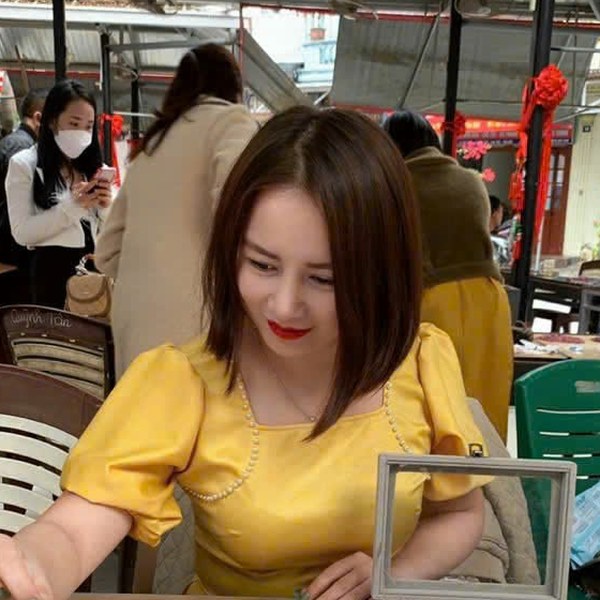
I'm Phuong — it means phoenix in Vietnamese, so friends abroad call me Phoenix. I'm a second-generation trader: my family has bought and sold stones at the Luc Yen market since 1990, from the ruby-fever years to a remarkable cobalt spinel strike we sold at the mine in 2020. On YouTube I test stones on camera in Vietnamese for 48,000 subscribers; here I do the same in English. Photos unedited, treatments disclosed, origin named — because I'll be facing the same market women next Sunday, and reputations here are for life.