Heated vs Unheated Ruby and Sapphire: What the Difference Is Worth
An unheated ruby or sapphire is one that came out of the ground looking the way it looks now. A heated stone spent hours in a furnace so that its colour or clarity would improve. Both are natural gemstones, both are legitimate to sell, and the difference between them is almost never visible to the eye — but on a fine stone it can be the single largest factor in the price. The reason is not that unheated stones are prettier. It is that they are rare. The overwhelming majority of ruby and sapphire on the world market has been heated, so a stone that reached gem quality without help is a small fraction of a small fraction.
That is the short version. The longer version matters, because “heated” covers a range that runs from a completely accepted trade practice to a product that is part glass, and the price consequences at each rung of that ladder are wildly different. Here is how we explain it to buyers across the table at the Luc Yen market.
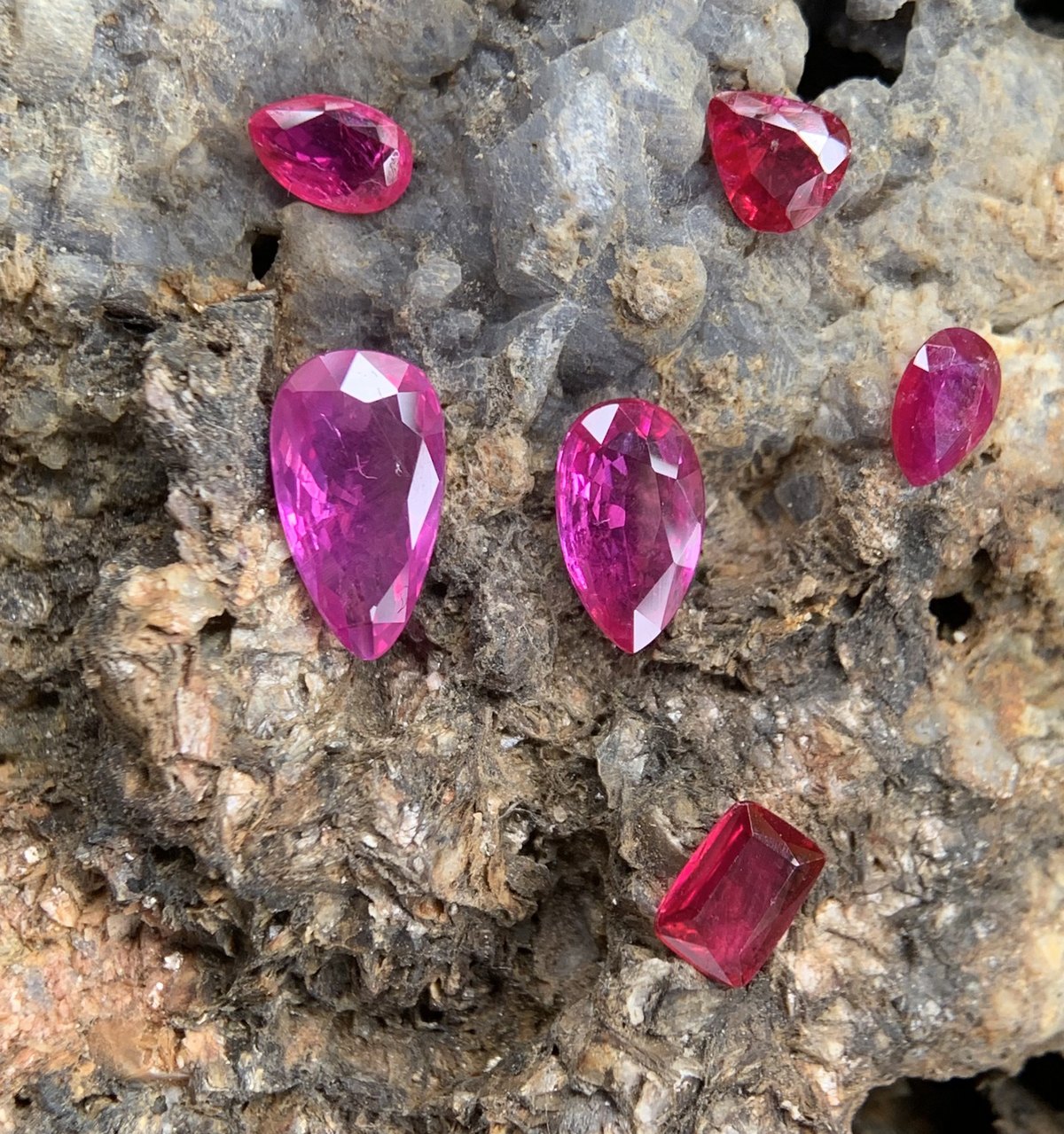
What heat actually does inside the stone
Ruby and sapphire are the same mineral: corundum, aluminium oxide. Red corundum is called ruby, every other colour is called sapphire. What separates a $50 stone from a $50,000 one is a trace-element accident — a few atoms of chromium, iron and titanium sitting in the crystal lattice, plus how those atoms are arranged and what else got trapped inside while the crystal grew.
Heating rearranges some of that. Depending on temperature, atmosphere and duration, a furnace can do three useful things:
- Dissolve “silk”. Many corundums contain microscopic needles of rutile — a titanium mineral — that scatter light and make a stone look sleepy or milky. Above roughly 1,600 °C those needles dissolve back into the crystal. The stone becomes visibly more transparent, and the released titanium can pair with iron already present to generate blue. This is the mechanism behind turning a pale, cloudy piece of Sri Lankan rough into a clean blue sapphire.
- Shift colour by altering the oxidation state of iron. Firing in an oxygen-rich or oxygen-starved atmosphere changes how iron sits in the lattice, which pushes colour toward or away from blue and yellow.
- Remove unwanted secondary colour. GIA puts it plainly: heating “can remove purplish coloration rendering a more pure red color” in ruby, and “can intensify, or even induce, a blue coloration in sapphires.”
None of this adds anything to the stone. It is the same crystal, with the same chromium doing the same job, rearranged. That is why the trade has accepted straightforward heat for centuries and why GIA describes such heat treatment as “durable and permanent under normal handling conditions.” A heated ruby will not fade, and it does not need special care.
Heat is not one treatment — it is a ladder
The phrase “it’s just heated” is where buyers get into trouble, because several very different processes all involve a furnace. They sit on a ladder, and value falls sharply as you go down it.
| Rung | What is done | Is anything added? | Effect on value |
|---|---|---|---|
| Unheated | Cutting and polishing only | No | The benchmark. Commands the premium at the fine end |
| Heat only | Furnace, no additives — colour and clarity improved | No | Standard and accepted. Priced as heated, which is a real market with real value |
| Heat with flux / fissure healing | A flux such as borax is added so that surface-reaching fractures partially heal during firing; glassy residue remains in the healed cracks | Yes, in the fissures | Below plain heat. Labs report it separately; the more residue, the bigger the discount |
| Titanium (surface) diffusion | Colouring element driven into a thin outer skin at high temperature | Yes | Heavy discount. The colour is skin-deep and can be lost if the stone is ever recut or repolished |
| Beryllium (lattice) diffusion | Beryllium diffused through the whole stone above roughly 1,800 °C, producing or altering colour throughout | Yes | Heavy discount. Permanent, but hard to detect — often requires chemical analysis, not a loupe |
| Lead-glass filling | Badly fractured, near-worthless material impregnated with high-lead glass so it looks transparent | Yes, substantially — part of what you hold is glass | A tiny fraction of a natural ruby’s value. Sold as “ruby” without disclosure, this is the trade’s worst abuse |
Two rungs deserve extra words.
Beryllium diffusion arrived in the early 2000s and caused a genuine crisis, because it worked so well. Beryllium atoms are far smaller than titanium or chromium, so they migrate through an entire sapphire rather than staying near the surface — GIA’s landmark Gems & Gemology study documented both the process and the identification problem it created. Dark, brownish material that would never have responded to ordinary heat could suddenly be turned into attractive orange, pink-orange and red stones. GIA notes that diffusion-treated corundum is “widespread in the trade” and “extremely difficult to detect with certainty in many instances.” For a buyer with a loupe it is not detectable at all — which is the clearest argument there is for a laboratory report on any stone that represents serious money.
Lead-glass-filled ruby — often called composite ruby — is a different category of problem. It is not an improved gemstone; it is a manufactured product built from material that had no gem value. The folklore about its fragility has grown taller than the facts, so here is what GIA’s durability testing actually found: careful steam cleaning, ultrasonic cleaning, setting and even prong retipping caused no damage to the fillings, but damage did appear on immersion in a jeweller’s pickling solution and on exposure to other reagents tested, including concentrated lemon juice, oven cleaner, ammonia, drain cleaner and bleach. An ordinary repair bench and an ordinary kitchen both contain things that will attack it. The deeper objection is simpler than durability, though: it is worth a small fraction of a natural ruby, and it is routinely sold as though it were not.
Looking for a stone like this?
Tell us what you are after and we will reply within 24 hours with real photos from the market.
Why unheated stones cost more
The honest answer is scarcity, not superiority. Take a parcel of ruby rough as it comes out of marble. Most of it is too included, too pale, too dark or too purplish to sell as it is. Heat rescues a large share of that material and turns it into the commercial stones that fill the world’s jewellery cases. Only a small proportion was already good enough that no one bothered to fire it — and of that proportion, a small share is also clean, well-coloured and large enough to matter.
So an unheated stone is evidence about the deposit and about luck. A collector paying the premium is buying a natural rarity, in the same spirit as one paying for an untouched first edition rather than a restored copy. The book reads identically either way.
This is also why the premium is not a fixed multiplier, and why you should distrust anyone who quotes one. Its size depends on where the stone sits in the quality pyramid:
- At the very top — fine colour, good clarity, meaningful size, with an origin and treatment report from a respected laboratory — the unheated premium is enormous, and the auction records for ruby and sapphire are overwhelmingly held by unheated stones.
- In the middle — a pretty one-carat stone of decent but not exceptional colour — the premium is real but moderate, and often smaller than the cost of the report needed to prove it.
- At the bottom — small commercial goods, melee, cabochons — “unheated” is close to meaningless as a price argument. A dull, included stone is a dull, included stone whether or not it saw a furnace, and no one is paying a premium for a mediocre stone’s virginity.
That last point is the one most often exploited. “Unheated” attached to inexpensive material is a marketing word, not a value driver.
How to actually know: what the report says
Treatment status is a laboratory question. It cannot be settled by looking at a stone in daylight, and it cannot be settled by a seller’s assurance, however sincere. Detection depends on internal evidence — the state of the silk, melted or altered inclusions, glassy residue in fissures, and for diffusion, trace-element chemistry that requires instruments.
The wording differs by laboratory. GIA reports use plain sentences: “no indications of heating” for an unheated stone, “indications of heating” where heat is detected. Lotus Gemology in Bangkok, which specialises in ruby, sapphire and spinel, uses a short code with an explanation attached rather than an opaque symbol — H for heat to improve colour and clarity, H-FH where fissures have been healed, H-GF where a glass-like filler hides surface cavities, H-D for diffusion — and it colour-codes the report cover itself: gold for stones with no detected treatment, silver for treated ones, black for heavily treated and synthetic material, including glass-filled hybrids. Whichever lab you use, the treatment line is the one to read first, and the report number is the one to verify on the laboratory’s own website. We covered the whole document line by line in our guide to reading a gem lab report.
Disclosure is not optional courtesy, either. In the United States the FTC’s jewellery guides require treatments to be disclosed where they affect value or require special care, and equivalent rules and trade codes apply in most serious markets. A seller who will not put treatment status in writing is telling you something.
What this means for stones from Luc Yen
Three different pictures, depending on the material:
Spinel is the easy case. The overwhelming majority of spinel — including the cobalt blue material this valley is known for — is sold completely untreated, because it does not respond usefully to heat the way corundum does. There is no heated-versus-unheated conversation to have. That is a genuine part of why collectors have moved toward it, and we set out the rest of the case in our spinel buying guide.
Ruby is the case where it matters most. Luc Yen ruby grows in low-iron marble, the same geology as Mogok, which is why fine stones from here fluoresce and glow in daylight. Heated Luc Yen ruby is a normal, honest commercial product and a great deal of it is sold. Fine unheated Luc Yen ruby, with a report, is a different market entirely — and a thin one, because most of the rough from this deposit comes out small. GIA’s early field studies found the majority of gem-quality Vietnamese rough at only 2–6 mm, and clean faceted stones above one carat are genuinely rare events here. If you are offered a large, cheap, unheated Vietnamese ruby, the arithmetic does not work; we go into the comparison in detail in Luc Yen ruby versus Burmese ruby.
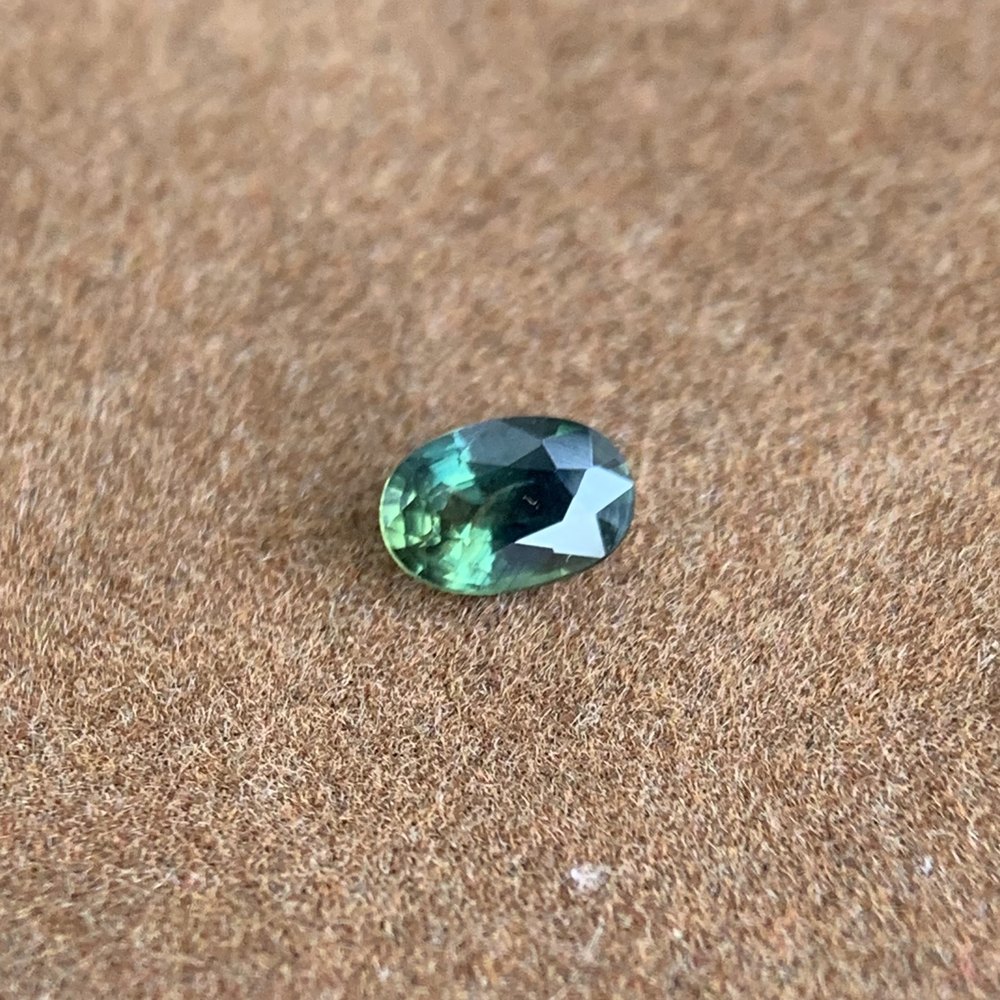
Sapphire deserves a plainer answer than most Vietnamese dealers give. Vietnam has two very different sapphire stories. The northern metamorphic deposits around Luc Yen sit in the same marble belt as the ruby and can produce attractive stones. The southern basalt-hosted deposits produce far more material, but it is iron-rich, which typically means dark, inky or greenish blue — commercial goods, and honestly not competitive with fine Ceylon, Madagascar or Burmese sapphire on colour or on price. We would rather say that than dress it up. If you want a fine blue sapphire, the treatment question and the origin question both matter, and Vietnam is not where we would send you first.
What to do as a buyer
A workable rule, and the one we use ourselves:
- Ask for treatment status in writing, before payment. The acceptable answers are specific words — unheated, heated, heated with residues, diffused, glass-filled — not stories about how fresh the stone is.
- Scale the paperwork to the price. On a stone that represents serious money, a report from a recognised laboratory is not optional, and it should be obtained or verified before you pay. On small parcel stones, the report would cost more than the goods, and you are relying on the dealer’s reputation and your own eyes instead. Both approaches are legitimate; confusing them is not.
- Treat an unheated claim on cheap material as noise. Judge the stone, then check whether the claim is worth paying for.
- Be suspicious of certainty about diffusion. No one can rule it out by eye. If a seller says a stone is definitely not diffused and there is no report, they are guessing.
- Ask whether the seller will support independent testing. Nothing separates dealers faster. A stone that cannot go to a laboratory under reasonable conditions is a stone with a reason not to.
Common questions
Will a heated ruby fade over time? No. Ordinary heat treatment of corundum is stable and permanent under normal wear, and GIA describes it that way explicitly. It needs no special care.
Can a jeweller reverse heat treatment? No. The change is structural and there is no way back.
Is a heated stone “fake”? No. It is a natural gemstone that has been enhanced by a long-established and accepted process. The problem is never heat — it is undisclosed heat, or a heated stone priced as an unheated one.
Can I tell by looking? Rarely, and never reliably. A gemmologist may see melted or altered inclusions under magnification that indicate heat. Nobody sees beryllium diffusion without instruments.
Does unheated always look better? No, and this is worth saying clearly. Heat exists because it improves how many stones look. A well-heated sapphire will frequently outperform an unheated one of the same price on colour and clarity. What the unheated stone has is rarity, and rarity is what the premium buys.
Is spinel ever heated? Occasionally, but it is uncommon, and the material coming out of Luc Yen is sold untreated as a matter of course.
Our position
We trade both. Heated ruby is most of what changes hands at the Sunday market, and there is nothing wrong with it as long as everyone at the table knows what it is. Unheated stones are rarer and priced accordingly, and when we have one worth the description we say so and support it with paper. What we will not do is let the word “natural” carry two meanings in one sentence. A stone is natural or synthetic; separately, it is treated or untreated. Any seller who blurs those two axes is, at best, being careless with your money.
Looking for a stone like this?
Tell us what you are after and we will reply within 24 hours with real photos from the market.
Sources
- GIA — An Introduction to Gem Treatments (heat, diffusion and filling: mechanisms, durability and disclosure)
- Emmett et al. — Beryllium Diffusion of Ruby and Sapphire, Gems & Gemology, Summer 2003
- GIA — Identification and Durability of Lead Glass-Filled Rubies
- Lotus Gemology — Gem Enhancements Explained (enhancement codes and the gold/silver/black report system)
- GIA — Gemstones from Vietnam: An Update (Luc Yen deposits, rough sizes, northern metamorphic versus southern basaltic sapphire)
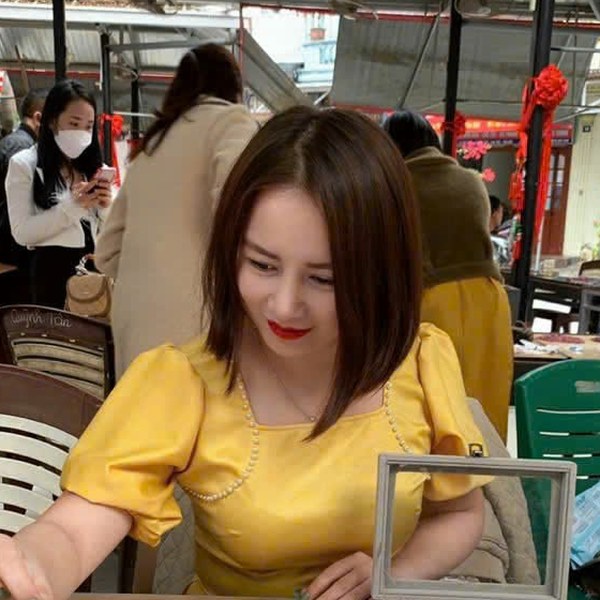
I'm Phuong — it means phoenix in Vietnamese, so friends abroad call me Phoenix. I'm a second-generation trader: my family has bought and sold stones at the Luc Yen market since 1990, from the ruby-fever years to a remarkable cobalt spinel strike we sold at the mine in 2020. On YouTube I test stones on camera in Vietnamese for 48,000 subscribers; here I do the same in English. Photos unedited, treatments disclosed, origin named — because I'll be facing the same market women next Sunday, and reputations here are for life.